
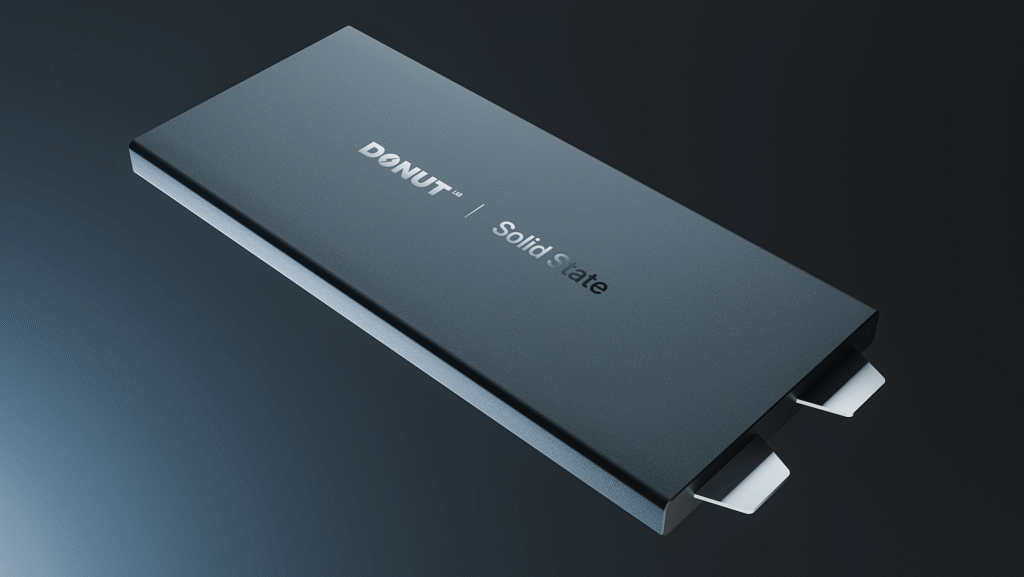
At CES 2026, amid a flood of cutting-edge technology announcements, one piece of news stood out as truly explosive: the all-solid-state battery has arrived.
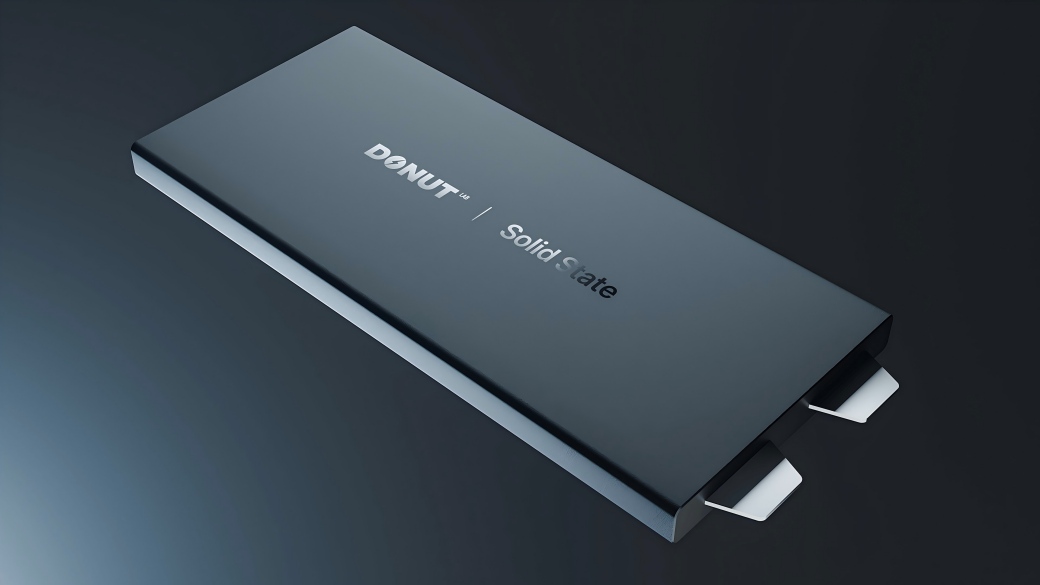
The announcement came from a Finnish technology company, Donut Lab, which unveiled what it claims to be “the world’s first mass-producible all-solid-state battery” at this year’s CES.
Solid-state batteries have long been regarded as the “holy grail” of next-generation energy storage and have attracted massive investment from global battery manufacturers and automakers alike. But has this long-awaited technology really arrived so suddenly?
What exactly is Donut Lab’s so-called “world’s first mass-producible all-solid-state battery”? The company has released some intriguing information. Let’s take a closer look, step by step.
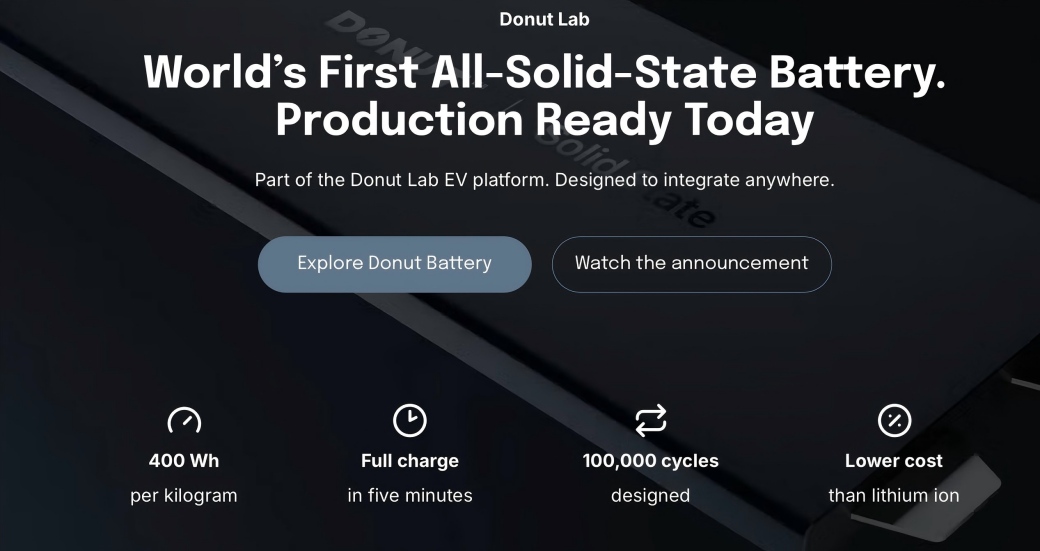
This is the homepage of Donut Lab’s official website. The most eye-catching message is the bold claim that their all-solid-state battery is about to enter mass production. Below that, the company lists several headline specifications:
-
Energy density: 400 Wh/kg
-
Fast charging: 0–100% in 5 minutes
-
Cycle life: 100,000 cycles
-
Cost: lower than conventional lithium-ion batteries
Let’s start with the energy density of 400 Wh/kg. For an all-solid-state battery, this figure is actually not particularly astonishing.
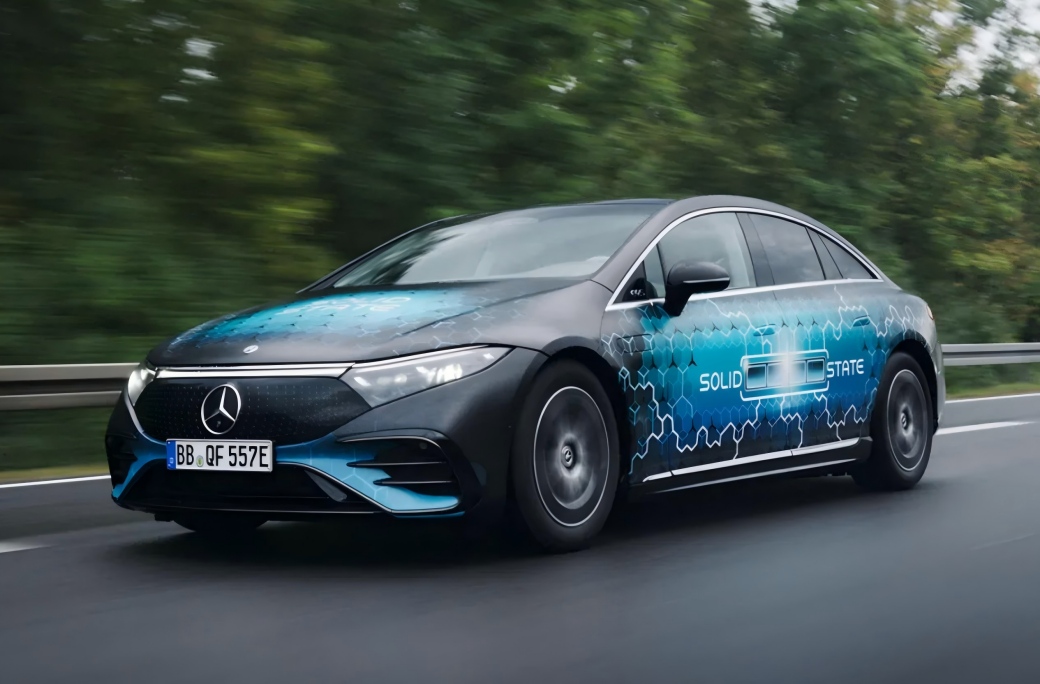
In theory, all-solid-state batteries should achieve more than twice the energy density of today’s lithium-ion batteries, with 500 Wh/kg or more generally considered achievable. For example, the solid-state battery prototype previously tested in a Mercedes-Benz EQS already reportedly reached 450 Wh/kg, despite not being in mass production.
An energy density of 400 Wh/kg can even be achieved by some semi-solid-state or quasi-solid-state batteries that still contain liquid electrolytes. In that sense, Donut Lab’s figure is relatively conservative.
However, the claim of “charging to 100% in just 5 minutes” is far more eye-catching.
It is true that solid-state batteries are expected to support much faster charging than today’s lithium-ion batteries. Replenishing most of the energy within 5 minutes would not be surprising. But Donut Lab’s wording is very explicit: “fast charge to 100% in 5 minutes.”
This is a crucial distinction. It implies that even when the state of charge (SOC) reaches 80% or 90%, the battery can still accept very high charging power—instead of entering the low-power trickle-charging phase typical of conventional lithium-ion batteries.
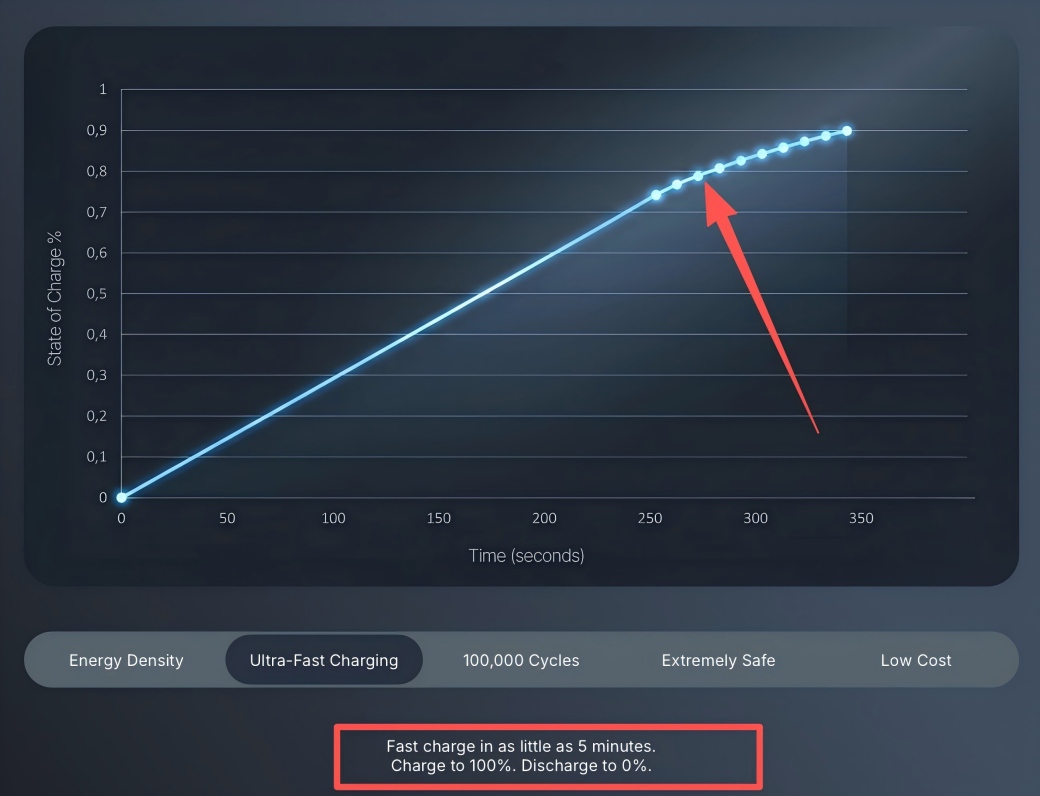
That said, the charging power curve shown on Donut Lab’s website does not seem to fully support this claim. According to the chart, at 300 seconds (5 minutes), the SOC appears to be only around 80%.
The 100,000-Cycle Claim
The third headline feature is the cycle life.
Compared with current lithium-ion batteries, a longer cycle life is indeed one of the inherent advantages of solid-state batteries. But a claim of 100,000 cycles is simply staggering. One cannot help but wonder whether an extra zero was added by mistake—because this would be by far the highest cycle life ever claimed for any solid-state battery.
For comparison, today’s EV batteries:
Lithium iron phosphate (LFP) batteries are known for their relatively long cycle life. For example, the first-generation BYD Blade Battery reportedly exceeds 3,000 charge-discharge cycles.
If each cycle corresponds to 300 km of driving, then 3,000 cycles already translate into 900,000 km of total mileage. Even at 50,000 km per year, that is enough for 18 years of use.
Now imagine applying Donut Lab’s claimed 100,000 cycles to the same calculation. You can do the math yourself.
This would be a battery that truly outlives the car—and perhaps even the owner. A battery that could be “passed down for generations.”
Other “Perfect” Features
Beyond these astonishing headline figures, Donut Lab also claims a series of equally impressive properties:
-
Absolutely non-flammable
-
Operates normally from –30°C to 100°C, while retaining over 99% of its performance
-
Manufactured using 100% environmentally friendly materials (though the specific materials have not been disclosed)
-
No cobalt, no nickel, and no other critical rare metals required in production
According to the company, this not only reduces cost but also eliminates supply chain bottlenecks and geopolitical risks, making it possible to manufacture the batteries anywhere in the world.
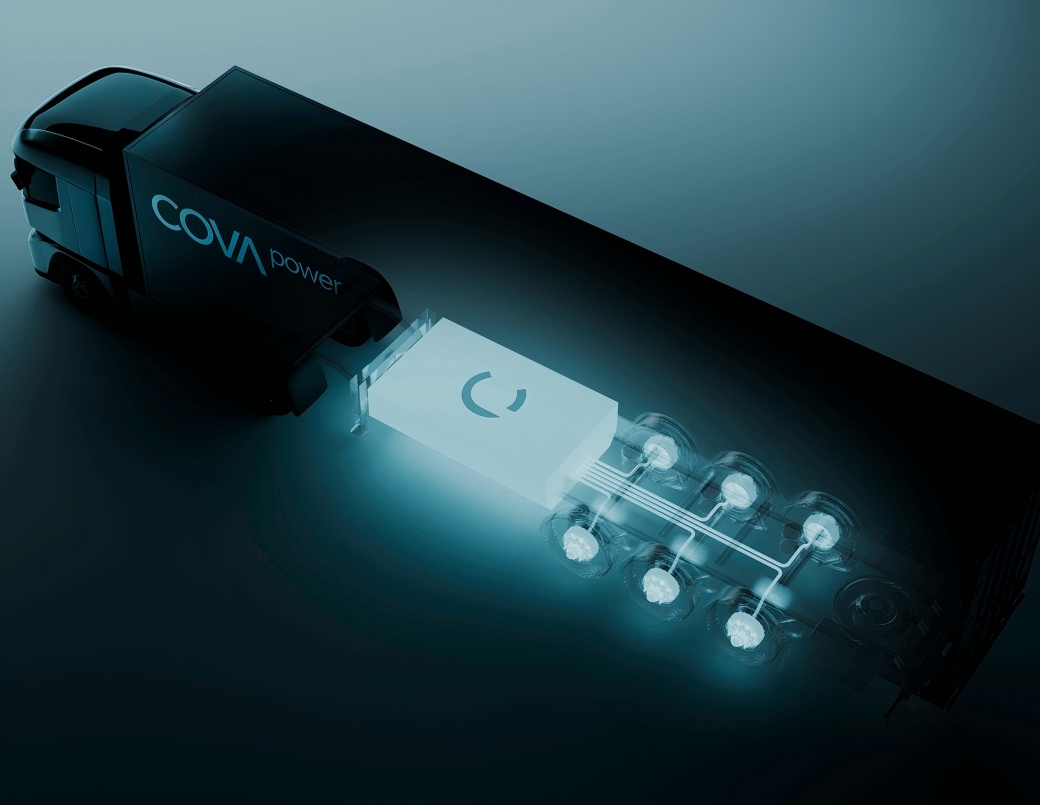
In addition, Donut Lab claims that its all-solid-state battery can be adapted to any form factor. The battery is described as being “like clay,” allowing the size and geometric shape to be freely customized.
In short, there are only two words to describe this battery: too perfect.
Final Thoughts
Donut Lab says its all-solid-state battery will first be installed in its own electric motorcycles, with mass production and delivery starting in Q1 this year.
Interestingly, this company is not only working on batteries—it is also involved in electric chassis systems, drive motors, industrial robots, and in-vehicle software platforms.
However, this is a very young startup. It was only spun off from its parent company at the end of 2024—less than a year ago. Even counting the parent company’s history, the total track record is only seven or eight years.
So how credible is the claim that it can already mass-produce all-solid-state batteries? Everyone can draw their own conclusion.
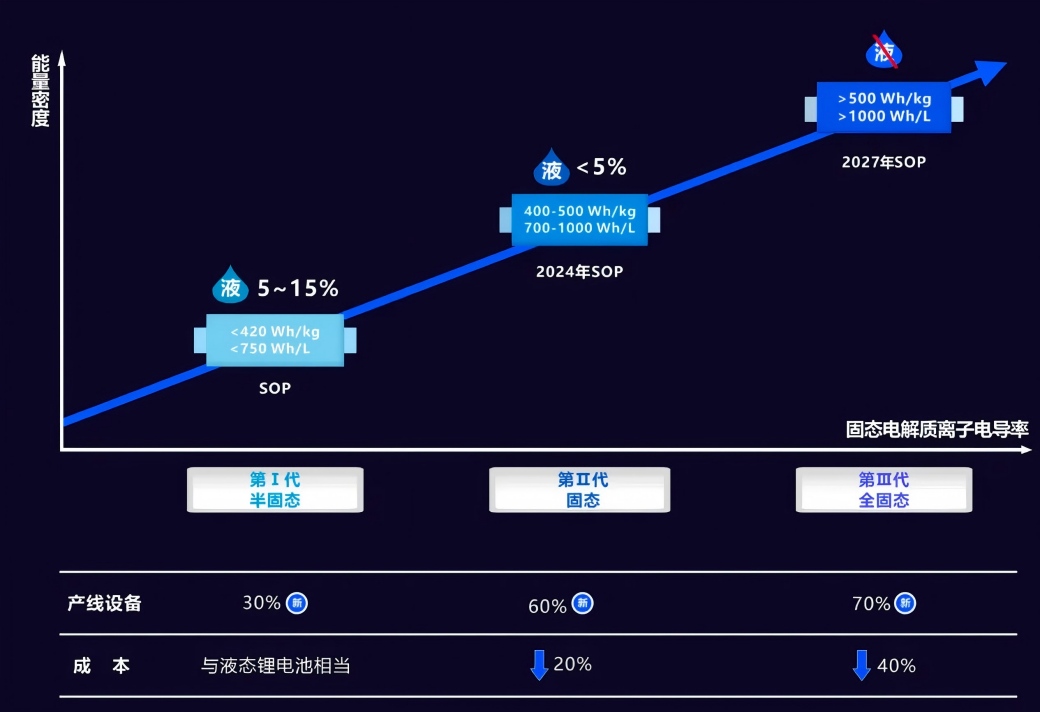
In fact, even if we set Donut Lab aside, most industry forecasts do not expect all-solid-state batteries to enter true mass production before 2027—and even that timeline has a high risk of being delayed.
As CATL’s chairman Robin Zeng (Zeng Yuqun) said late last year:
“If we use numbers from 1 to 9 to represent the technological and manufacturing maturity of solid-state batteries, the highest level in the industry today is only around 4. We have only made some device-level samples and conducted some experimental verification.”
On one hand, there are still major challenges in materials and manufacturing processes. On the other hand, building an entirely new production system brings enormous cost and scaling challenges.
In short, mass production of true all-solid-state batteries is still not something we can realistically expect in the near term.