
The paradigm is shifting from “vehicles” to “intelligent agents,” and Chinese players are at the forefront while geopolitics casts a shadow.
Remember the dot-com bubble of 2000? Everyone called it hype. Yet today, no one can deny the internet transformed our world.
At CES 2026 in Las Vegas, a new term is sweeping the floor with similar fervor: “Physical AI.” It moves beyond chatbots and image generators confined to screens, empowering AI to enter the physical realm: controlling robotic locomotion, directing autonomous vehicles around obstacles, piloting delivery drones, and even automatically charging electric cars.
NVIDIA CEO Jensen Huang calls it “the ultimate form of next-generation AI.” In this wave of technological enthusiasm, traditional US automakers were notably absent, while Chinese brands and AI firms took center stage.
“Hype does not equate to falsehood; it is merely the noise preceding reality’s arrival.”
CES Transformed: An Auto Show Becomes a “Robotics Expo” CES was once the stage for Detroit’s Big Three to unveil new cars. In 2026, however, GM, Ford, and Stellantis were virtually invisible. Replacing them were AV companies like Zoox, Waymo, Nuro, and Tensor Auto, alongside Chinese automakers such as Geely and Great Wall.
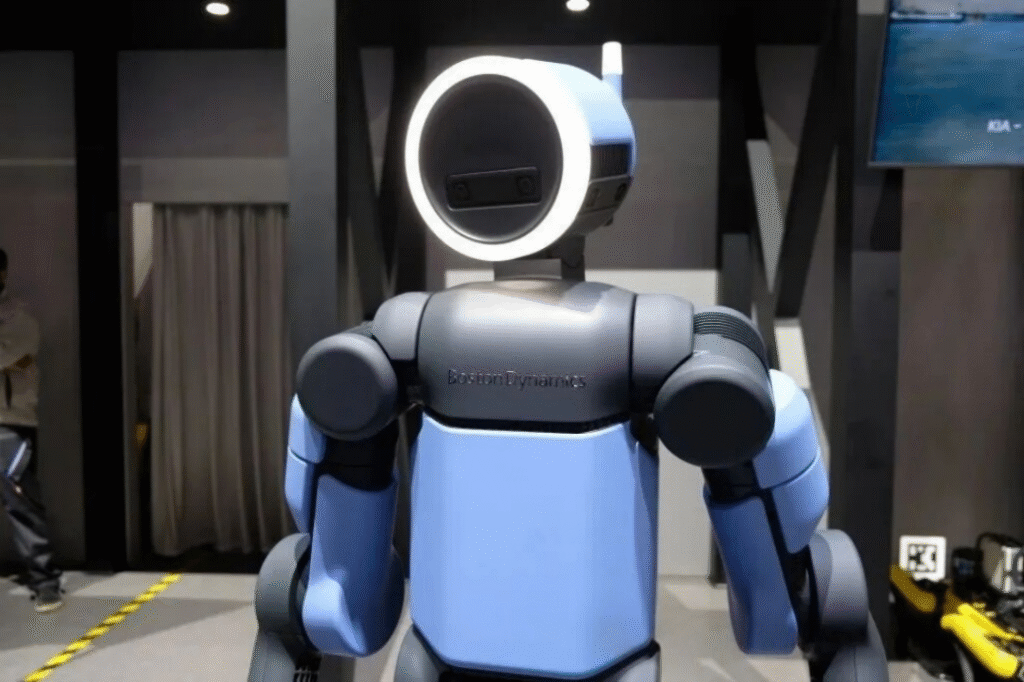
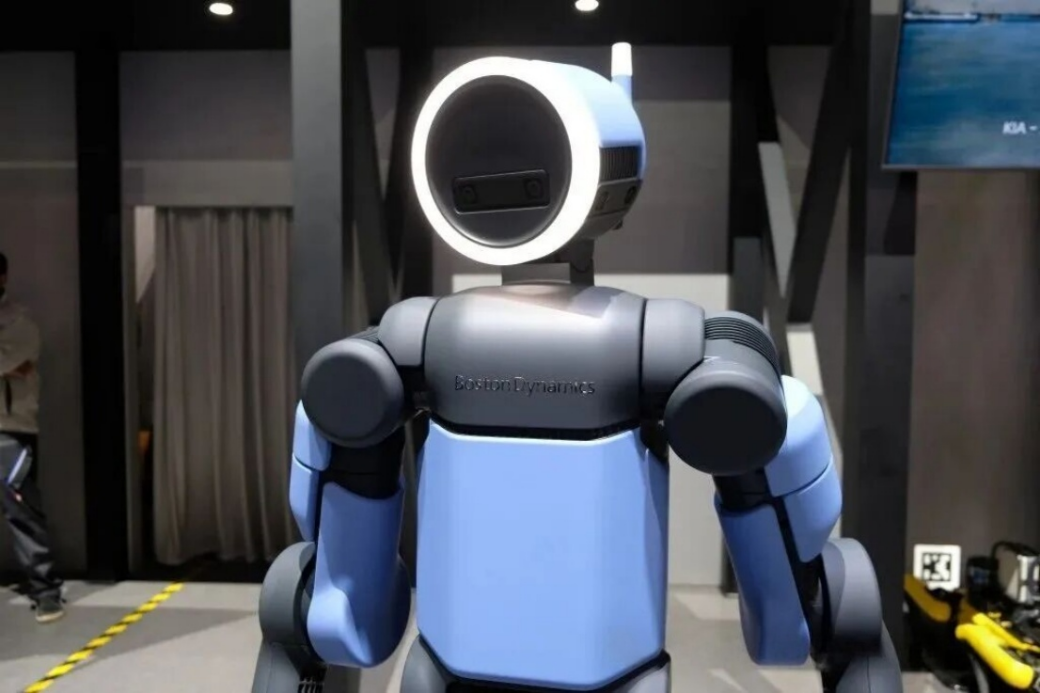
The most striking presence was the Hyundai Motor Group. They didn’t bring a single car. Instead, they unveiled an entire “robot army”: Boston Dynamics’ Atlas humanoid robot, service bots that autonomously charge vehicles, and the nearing-production four-wheel mobile platform MobEd. Crowds lined up not to see cars, but to witness “how the future moves.”
This signals a profound paradigm shift: the very definition of transportation is being rewritten—from “vehicle” to “intelligent agent.”
What is Physical AI? AI Finally Escapes the Digital Cage Physical AI, also known as Embodied AI, refers to the deep integration of large language models with sensors, cameras, and motor control systems, enabling machines to perceive, reason, and act within real physical environments.
Examples abound:
- NVIDIA’s newly launched Alpamayo model allows AVs to “think like humans”—not just identifying objects but understanding intent.
- Mobileye’s $9B acquisition of humanoid robotics firm Mentee Robotics aims to create “industrial assistants that can learn and collaborate.”
- Joby Aviation is building a plant in Ohio, targeting a production rate of 4 eVTOL air taxis per month by 2027.
These are not lab demos; they are products nearing mass production. Physical AI is permeating every sector from agriculture, logistics, and manufacturing to urban mobility.
Are Humanoid Robots a Bubble? Hear It From Industry Leaders Facing skepticism of “pure hype,” Mobileye founder Amnon Shashua counters: “When the dot-com bubble burst in 2000, people said the internet wasn’t real. But what about today?”
He is convinced humanoids are not a gimmick but the ultimate embodiment for general-purpose intelligent agents. Why? Because our world—its doorknobs, stairs, and tools—is designed for the human form. Only humanoid robots can seamlessly integrate into existing environments.
This explains the rush of tech giants: Tesla Optimus, Figure 02, Xiaomi CyberOne… At CES, nearly every robotics booth demonstrated basic tasks like opening doors, moving boxes, or handing over water—seemingly simple, yet the first critical steps toward general capability.
US-China Dynamics: Building Walls vs. Opening Doors As Physical AI advances, geopolitics injects uncertainty. Donald Trump in Detroit declared, “We welcome Chinese automakers to build plants in the US!”—a statement that reportedly sent the American Automotive Policy Council into alarm. The reason is clear: 2025 US legislation already bans the import of connected vehicles with ties to China, citing national security risks.
Avery Ash, CEO of the non-partisan organization SAFE, warned: “Allowing Chinese automakers in would endanger the entire US defense industrial base.”
Ironically, Canada moves in the opposite direction: PM Mark Carney announced a slash of Chinese EV import tariffs from 100% to just 6.1%. This contrast—blockade versus embrace—is fragmenting the global smart mobility landscape.
Capital Cools, Industry Gets Pragmatic Amid the buzz, there are sobering signals. Luminar, the lidar star once valued at $11B, sold off key assets for a mere $22M, a drop exceeding 99%. A stark reminder: cool tech without a viable path to market remains just an idea.
Yet, other companies progress steadily:
- Wing’s drone delivery expands to 150 Walmart stores.
- Flix acquires European airport shuttle platform Flibco.
- New York State proposes legislation to allow commercial Robotaxi statewide (excluding NYC).
Real transformation isn’t built on PowerPoints, but on delivering one more order, driving one more kilometer, serving one more user every day.
“The future of AI isn’t in the cloud; it’s on the road, in the factory, at your doorstep.”
Business models are evolving too. Tesla officially ended the FSD lump-sum payment, shifting entirely to a monthly subscription—turning autonomy into a service, not just a feature. Platforms like inDrive are launching “Super App” strategies, expanding from ride-hailing into ads, e-commerce, and local services. Future mobility companies may not just sell miles, but “lifestyle access.”
Conclusion: We Stand at the Threshold of the “Intelligent Agent Era” CES 2026 makes it clear: AI’s next act is not about smarter conversation, but more autonomous action. When robots self-charge, AVs understand a pedestrian’s glance, and drones avoid kites in the sky—the world truly changes.
Hype will recede, but the tide will not stop. As Shashua noted: “The field is real. It’s just that some companies will be eliminated.”
The day your package arrives by drone, your commute is handled by a Robotaxi, and your warehouse is managed by humanoids will no longer be science fiction.
Are you ready for an era where everything around us can “think”?