
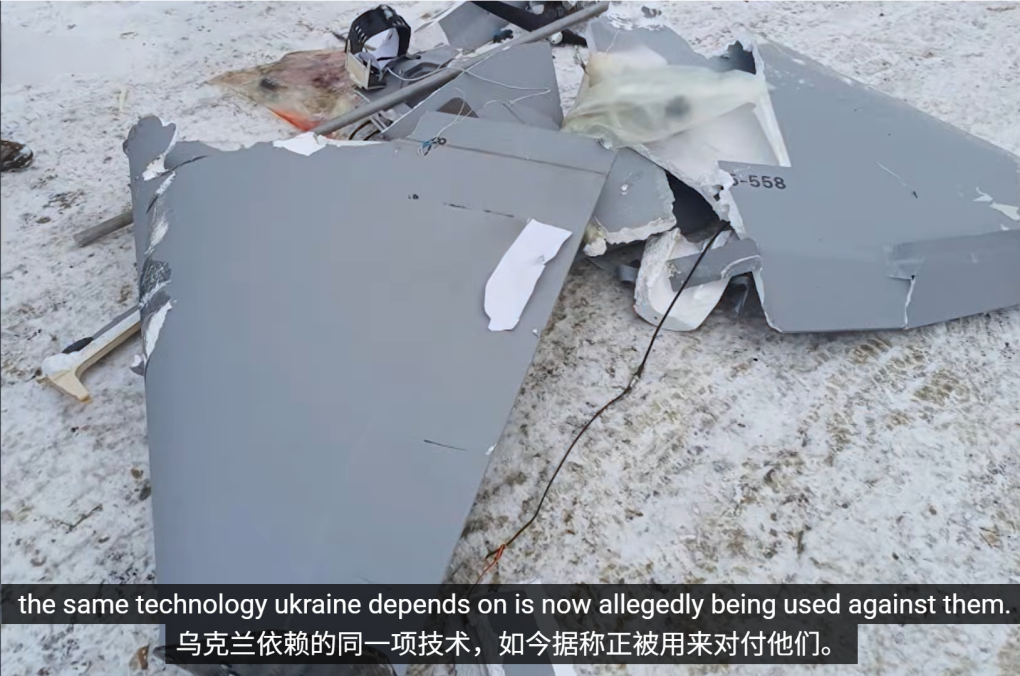
The primary reason Starlink-enabled unmanned aerial vehicles (UAVs) are capable of operating over dramatically extended distances lies in a fundamental transformation of their communication architecture.
By eliminating the line-of-sight (LOS) constraints inherent to traditional radio-frequency and cellular networks, Starlink enables true beyond-line-of-sight (BLOS) control through a low Earth orbit (LEO) satellite constellation.
This development does not merely extend operational range; it introduces a structural change in unmanned operational concepts and employment models.
📡 Traditional RF / Cellular Links vs. Starlink Satellite Connectivity
The differences between conventional communication methods and Starlink-based satellite links can be summarized as follows:
| Capability Dimension | Traditional RF / 4G Communication | Starlink (LEO SATCOM) |
|---|---|---|
| Effective Control Range | Typically ≤ 50 km; strongly constrained by terrain and Earth curvature | Effectively global; reported mission ranges of 500–2500 km |
| Link Stability | Susceptible to obstruction and rapid degradation beyond ground infrastructure | Continuous satellite handover provides stable connectivity |
| Data Throughput | Limited bandwidth; real-time HD video transmission is difficult at long range | High-bandwidth, low-latency data links enable live video and telemetry |
| Electronic Warfare Vulnerability | Control and GNSS bands are relatively vulnerable to jamming | Operates on distinct frequency bands, more resistant to conventional EW systems |
| Operator Exposure | Requires proximity to the operational area | Enables control from strategic rear locations |
🛰️ Technical Foundations of Ultra-Long-Range UAV Control
Starlink’s effectiveness in UAV operations is primarily driven by two technical factors:
1️⃣ Low-Orbit Architecture and Constellation Density
Starlink satellites operate at an altitude of approximately 550 km, resulting in low end-to-end latency (~27 ms).
The large-scale constellation ensures persistent coverage across most geographic regions, allowing UAVs to operate independently of terrestrial communication infrastructure.
2️⃣ High-Capacity, Stable Data Links
With data rates reaching hundreds of megabits per second, Starlink supports:
-
Continuous command and control
-
Real-time ISR video transmission
-
Man-in-the-loop engagement decisions from remote command centers
This capability transforms long-range UAVs into network-integrated platforms rather than autonomous, communications-limited assets.
✈️ Operational Implications: Beyond Extended Range
The operational consequences of satellite-enabled UAV connectivity are substantial:
🔹 Reconfiguration of Offensive and Defensive Depth
UAVs can bypass forward defensive layers and access deep operational rear areas, challenging traditional assumptions regarding strategic depth and rear-area security.
🔹 Enhanced Precision and Mission Flexibility
Live video and telemetry enable operators to:
-
Re-task missions dynamically
-
Identify and engage mobile targets during terminal phases
-
Employ low-cost UAVs as long-range precision strike systems
🔹 Enablement of Coordinated Multi-UAV Operations
Reliable satellite connectivity allows centralized control nodes to manage multiple UAVs concurrently, supporting:
-
Distributed intelligence, surveillance, and reconnaissance (ISR)
-
Coordinated or saturation attack profiles
-
Cooperative mission execution across platforms
⚠️ The Core Constraint: Satellite “On-the-Move” Phased-Array Antennas
Despite its advantages, Starlink integration is constrained by a critical subsystem:
the electronically steered phased-array antenna required for SATCOM-on-the-move (SOTM).
📦 Size and Mass Constraints
-
Consumer-grade Starlink terminals are unsuitable for airborne platforms
-
Aviation-oriented flat-panel terminals typically weigh 1.3–2.3 kg, with footprints of approximately 30–40 cm
For light UAVs, this represents a disproportionate payload burden.
🔋 Power Consumption Requirements
-
Typical continuous power demand ranges from 100 to 200 W
-
For battery-powered UAVs, this can significantly reduce mission endurance
As a result, satellite integration becomes a system-level trade-off involving power generation, payload allocation, and endurance.
⚖️ Integration Feasibility Across UAV Classes
Typical Maximum Takeoff Weight
| UAV Class | Typical Maximum Takeoff Weight (MTOW) | Integration Assessment |
|---|---|---|
| Micro / Small | < 25 kg | ❌ Operationally impractical |
| Light Tactical | 25–150 kg | ⚠️ Feasible only with significant compromises |
| Medium MALE | 150–1000 kg | ✅ Primary integration candidates |
| Large / Strategic | > 1000 kg | ✅ Easily accommodated |
Medium and large UAVs—particularly those equipped with internal combustion engines and onboard generators—currently offer the most practical integration pathway.
🔍 Observed Applications and Future Development Trends
✅ Current Deployments
Publicly documented integrations are largely limited to medium and large military UAV platforms, including:
-
Modified UAVs employed in active conflict environments
-
U.S. Department of Defense testing involving MQ-9-class systems
🚀 Emerging Technology Trends
Two parallel development directions are evident:
-
Terminal Miniaturization
-
Reduced mass, volume, and power consumption of phased-array antennas
-
-
Native SATCOM-Centric UAV Design
-
Satellite communication treated as a core subsystem
-
Integrated optimization of aerodynamics, structure, and energy management
-
💎 Conclusion
Starlink connectivity does not universally convert all UAVs into global-range platforms.
Instead, it functions as a capability amplifier for UAVs that already possess sufficient:
-
Payload margins
-
Power generation capacity
-
Endurance reserves
At present, this remains a high-end operational capability, requiring careful optimization across:
Communication performance × Mission payload × Endurance
As satellite terminals continue to evolve toward lower mass and reduced power consumption, the operational threshold for integration is expected to decrease—broadening applicability across the unmanned systems domain.
