
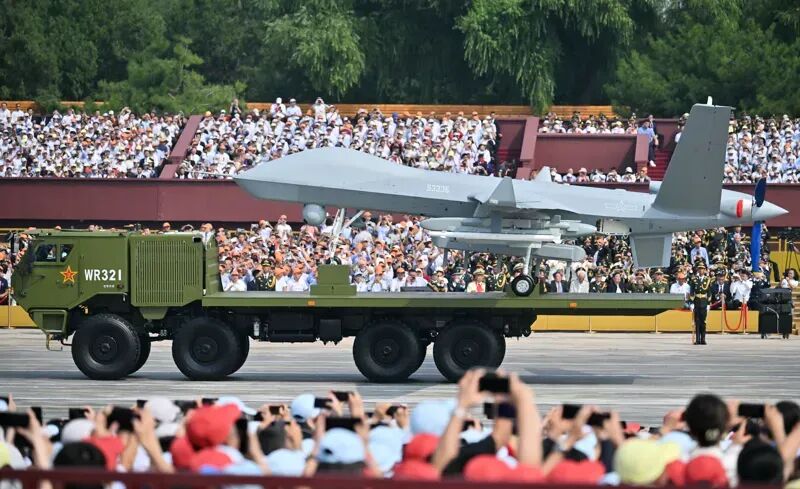
When people think about drones today, they usually picture a simple quadcopter: four arms, four propellers, and a flying camera in the sky. But in reality, “drone” is a much broader category of aircraft than most people realize — from small racing quadcopters to heavy-lift hexacopters, octocopters, fixed-wing UAVs, and even jet-powered unmanned systems.
The reason for these different shapes is not aesthetics. It’s engineering trade-offs.
Flight is always a balance: lift, efficiency, and energy
At the core of any multirotor drone is a simple principle: it flies by pushing air downward using propellers.
There are only two ways to increase lift:
- Increase propeller size
- Increase motor speed
But both come with costs:
- Larger or more propellers increase drag and power consumption
- Higher speeds demand stronger batteries, thicker wiring, and better thermal management
- Every gram added reduces endurance and payload efficiency
This is why drone design is always a compromise between performance and energy consumption — and why batteries are not just components, but system enablers.
Fewer rotors vs more rotors: different missions, different logic
Drone configurations are chosen based on mission needs:
Quadcopters (4 rotors)
- Lightweight
- Fast response
- Cost-efficient
- Used for FPV racing, aerial photography, and even tactical missions
- Optimized for agility, not payload

Hexacopters (6 rotors)
- Better stability in wind
- Higher payload capacity
- Common in professional mapping, agriculture, and industrial inspection

Octocopters (8+ rotors)
- Maximum redundancy and safety
- Can continue controlled flight even after motor failure
- Used for heavy payloads like cinema cameras or industrial equipment
In short:
- Fewer rotors = faster, lighter, more efficient
- More rotors = heavier, more stable, more reliable
There is no “best” configuration — only the right configuration for the mission.
Why redundancy matters in real-world operations
One of the most important engineering advantages of multi-rotor systems is fault tolerance.
If one motor fails:
- Quadcopters often lose stability immediately
- Hexacopters and octocopters can compensate by redistributing thrust
- Flight control systems dynamically adjust motor outputs to maintain balance and allow emergency landing
This is critical for industrial applications where drones carry:
- Expensive LiDAR payloads
- Critical delivery cargo
- Agricultural chemicals
- Infrastructure inspection sensors
Reliability is not optional — it is mission-critical.
Beyond multirotors: fixed-wing and hybrid drones
Not all drones rely on rotors.
Fixed-wing UAVs:
- Fly like airplanes
- Much longer endurance
- Much higher efficiency for long-distance missions
Hybrid VTOL systems:
- Combine vertical takeoff with fixed-wing cruise efficiency
- Increasingly used in logistics and surveillance
In advanced defense and industrial scenarios, UAVs are no longer just tools — they are becoming part of integrated aerial systems.
What this means for the drone battery industry
From a battery perspective, drone diversity creates one clear reality:
There is no universal battery.
Each platform demands a different energy strategy:
- Racing drones → high discharge rate, lightweight packs
- Agriculture drones → high capacity, stable output, thermal resistance
- Industrial inspection drones → long cycle life, reliability under vibration
- Heavy-lift drones → high-voltage systems, redundancy-ready power architecture
- Fixed-wing UAVs → energy density and endurance optimization
As drones evolve, batteries become increasingly mission-specific rather than standardized.
Final thought
Drones are no longer just “cool flying gadgets.” They are becoming:
- Agricultural tools
- Logistics infrastructure
- Industrial inspection platforms
- Tactical systems
- Emergency response assets
And behind every one of them, the real limitation is still energy.
For companies working in drone power systems, the key question is no longer: “How powerful is the battery?”
But rather: “What mission is this energy designed to support?”
