
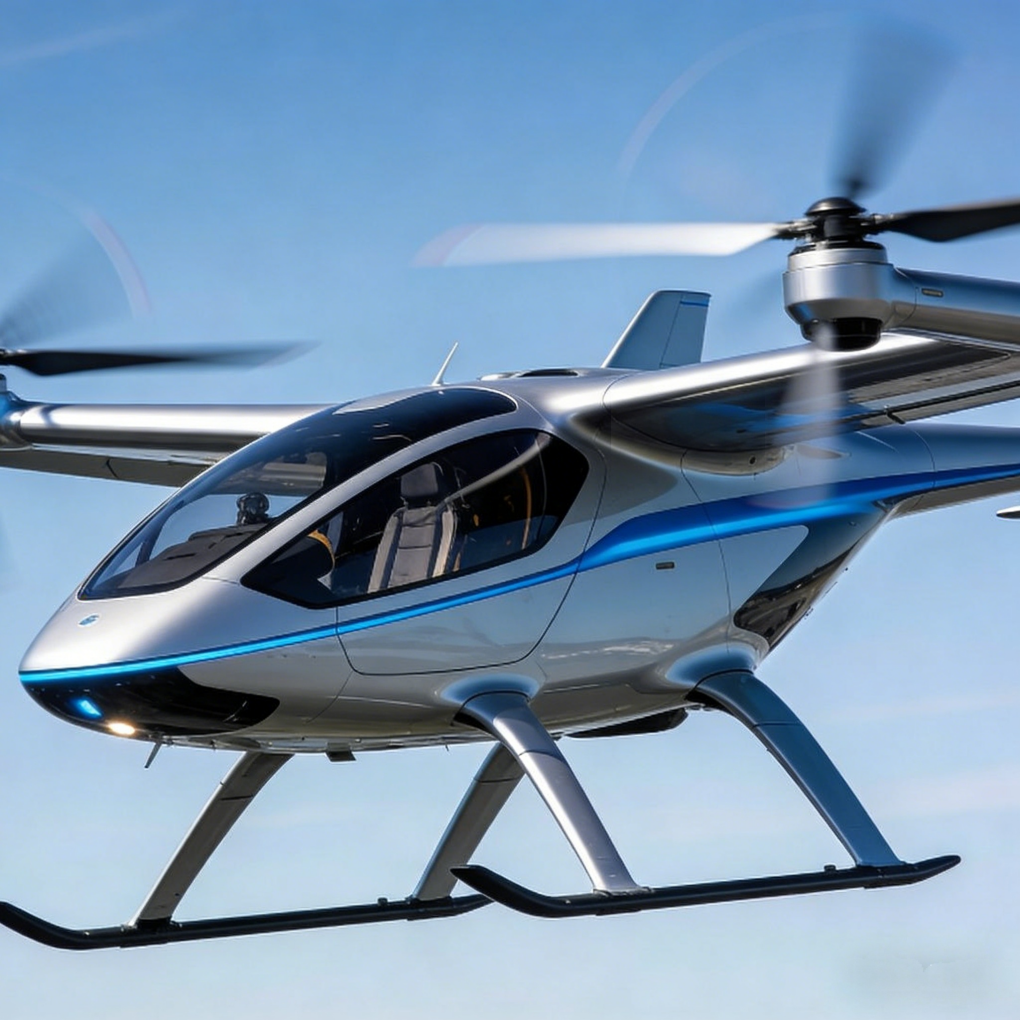
In discussions about electric vertical takeoff and landing (eVTOL) aircraft, we often focus on thrust, aerodynamics, and acoustic performance. Yet the true determinant of an aircraft’s capability, safety, and certification path lies in its beating heart—the battery system.
Battery placement, pack configuration, power distribution logic, and cooling strategy do far more than determine range or payload capacity. They directly influence fault tolerance, crash safety, maintenance efficiency, and regulatory certification timelines.
Below is a technical comparison of how four major eVTOL developers—Joby Aviation, Archer Aviation, Vertical Aerospace, and Beta Technologies—are approaching battery architecture, along with the strategic trade-offs behind their design choices.
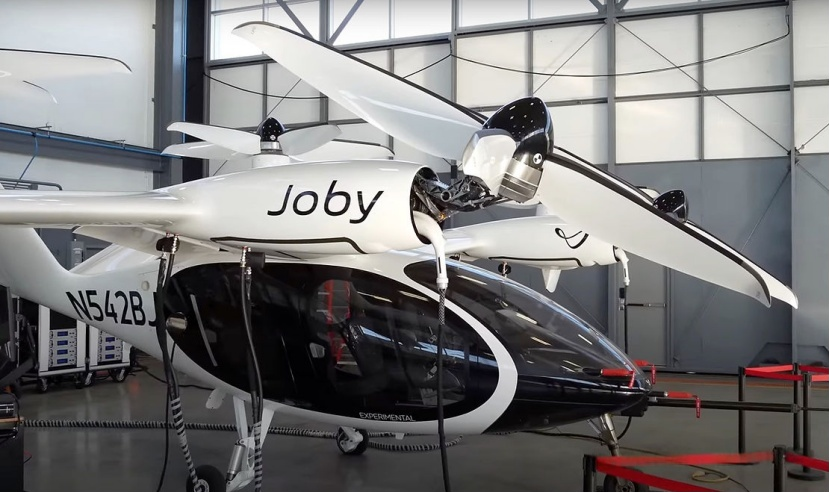
1. Joby Aviation: The Redundancy Champion
Architecture
Placement: Integrated within the wing structure and propulsion nacelles.
Configuration:
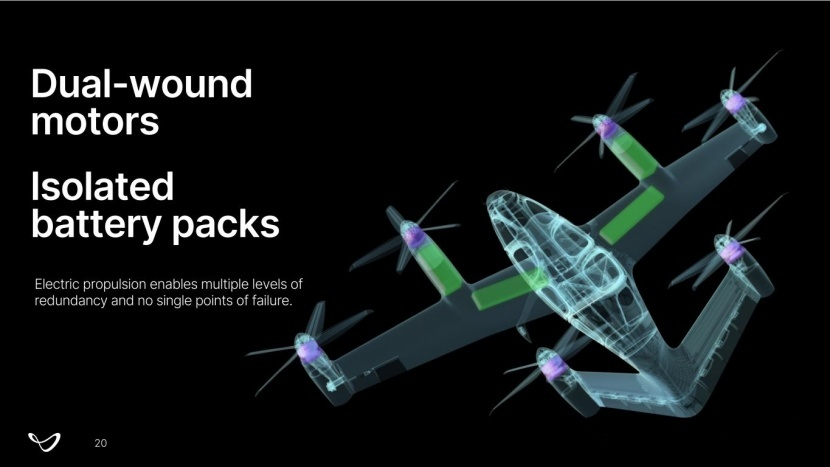
4 independent high-voltage battery packs composed of 28 modules, symmetrically distributed between both wings.
Power Logic:
Each of the six motors is powered through two independent inverters, each drawing energy from different battery packs.
Even if one battery pack fails completely, all six motors can still operate.
Advantages
Safety First
Battery systems are located far from the passenger cabin, reducing fire risk to occupants.
Extreme Redundancy
The four-pack architecture ensures that even with a full pack failure, the aircraft retains operational capability.
Drawbacks
Maintenance Complexity
Because packs are embedded inside the wing, replacement or maintenance can be time-consuming.
Aerodynamic Trade-offs
Housing batteries within the wing requires a thicker airfoil profile, which may slightly impact aerodynamic efficiency.
Battery Technology Strategy
Joby prioritizes maximum energy density to achieve longer range.
-
Chemistry: NMC 811 (high-nickel lithium-ion)
-
Cell Format: Pouch cells
-
Cooling: Liquid cooling system
Strategic Goal:
Achieve approximately 150 miles of range for urban air taxi missions by maximizing energy density, accepting the increased complexity of pouch-cell thermal management.
2. Archer Aviation: The Power Specialist
Architecture
Placement: Battery packs are mounted in pairs within the wings.
Configuration:
6 independent 800V high-voltage battery packs.
Power Logic:
The packs feed the aircraft’s 12 lift+cruise motors through isolated power channels.
If one pack fails, the others continue supplying power.
Advantages
Strong Fault Isolation
Six physically separated packs limit failure propagation.
Thermal Runaway Management
Archer uses cylindrical 21700 cells, which feature mature mechanical venting systems, making thermal propagation easier to control.
Drawbacks
Electrical Complexity
Six distributed packs require extensive high-voltage wiring.
Lower Packing Efficiency
Cylindrical cells typically have slightly lower volumetric efficiency than pouch cells.
Battery Technology Strategy
Archer prioritizes high power output rather than maximum energy density.
-
Chemistry: High-power NMC
-
Cell Format: 21700 cylindrical (from Molicel)
Strategic Goal:
eVTOL aircraft require extreme power during takeoff, far higher than during cruise. Archer’s architecture focuses on power density and thermal stability rather than maximizing total range.


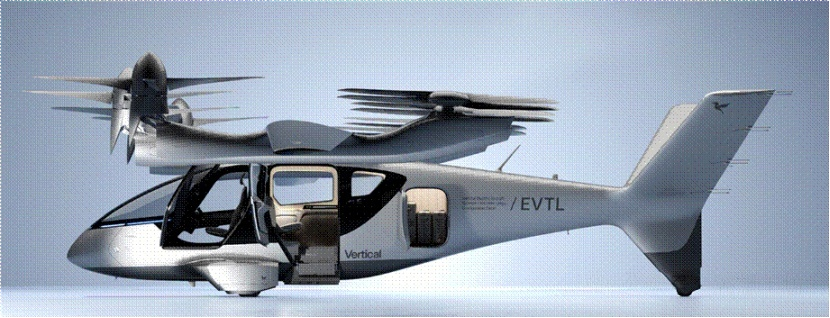
3. Vertical Aerospace: The Pragmatic Integrator
Architecture
Placement:
Under-floor integrated battery system (in the production VX4/Valo platform design).
Configuration:
8 liquid-cooled battery packs.
Power Logic:
Each pack feeds a dedicated power channel, supporting the aircraft’s 8 propulsion motors and ensuring single-point failure tolerance.
Advantages
Maintainability
Under-floor placement allows faster pack replacement and improved turnaround times.
Modular Redundancy
Eight independent packs create a highly fault-tolerant architecture.
Drawbacks
Space Consumption
Battery packs occupy fuselage space that could otherwise be used for payload.
Structural Reinforcement
The fuselage floor must be heavily reinforced to protect battery modules.
Battery Technology Strategy
Vertical Aerospace also emphasizes high power and certification safety.
-
Chemistry: NMC lithium-ion
-
Cell Format: High-power cylindrical cells (Molicel)
Strategic Goal:
European regulators often emphasize thermal runaway containment. Cylindrical cells provide a well-understood safety profile that may simplify certification discussions.
4. Beta Technologies: The Holistic System Builder
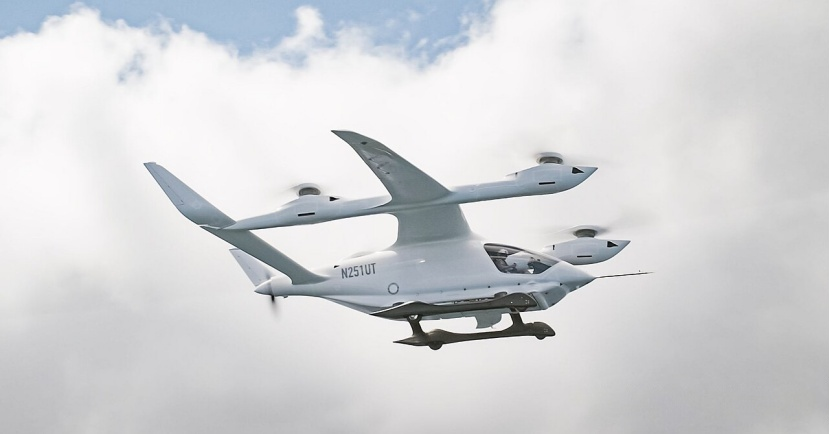
Architecture
Placement:
Centralized beneath the cabin floor inside a dedicated protective battery compartment.
Configuration:
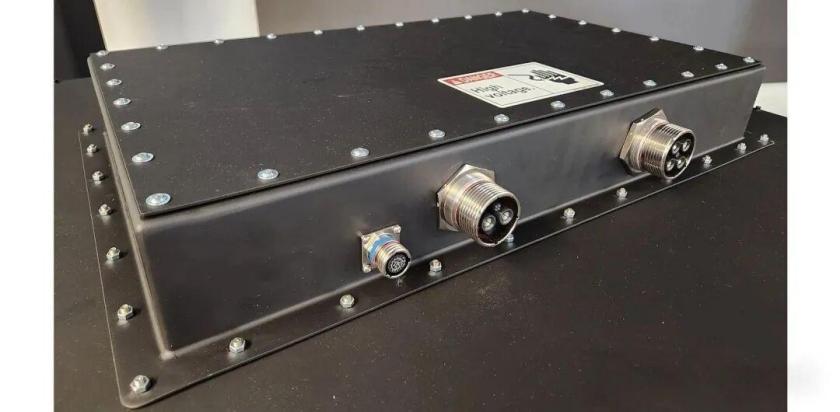
5 modular 800V battery modules.
Power Logic:
Triple-layer redundancy covering:
-
thermal runaway protection
-
communication system redundancy
-
balanced discharge management
Advantages
Center-of-Gravity Optimization
Locating heavy batteries low and central improves aircraft stability.
Platform Versatility
Battery modules are designed for use across multiple aircraft platforms, including:
-
eVTOL aircraft
-
CTOL (conventional takeoff and landing) electric aircraft
Cargo-Friendly Cabin Design
The architecture allows for a flat interior floor, ideal for logistics operations.
Drawbacks
Aerodynamic Profile
Under-floor housing may increase fuselage drag.
Crash Protection Requirements
In hard landings, the lower fuselage absorbs the initial impact, requiring extremely strong structural protection.
Battery Technology Strategy
Beta focuses less on cell chemistry and more on system-level integration.
Strategic Goal:
Instead of treating the battery as a standalone component, Beta designs a complete ecosystem, including:
-
aircraft
-
battery modules
-
charging infrastructure
They are actively promoting CCS fast-charging standards for electric aviation.

The Bigger Debate: Where Should eVTOL Batteries Live?
As the industry moves toward commercial certification, the key debate may not simply be pouch vs. cylindrical cells.
Instead, the more fundamental question is:
Where should the aircraft’s “heart” be located?
-
Wing-mounted packs: better aerodynamic efficiency
-
Under-floor packs: better center-of-gravity stability and easier maintenance
Both approaches have compelling advantages.
The final answer may ultimately depend on how manufacturers balance range, safety, certification complexity, and operational practicality.
What’s your perspective?
Will the eVTOL industry converge on wing-integrated battery systems for aerodynamic optimization, or under-floor modular packs for maintenance and stability?
