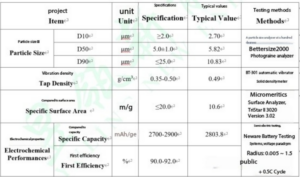
A new breakthrough has been achieved in solid-state batteries using porous silicon carbon negative electrodes, with a specific capacity of up to 2800mAh/g!
Solid state batteries, as the most ideal form of lithium batteries, are widely sought after by various sectors of society due to their high energy density, high safety performance, and long cycle advantages. After years of joint efforts from both upstream and downstream industries, significant breakthroughs have been achieved in materials, production, and application. OEMs such as Toyota, SAIC, and Changan, as well as battery cell manufacturers such as Ningde, have announced production schedules for solid-state batteries. In 2-3 years, we will no longer have to worry about the range and safety of new energy vehicles.

In addition to the solid electrolyte, the high specific capacity negative electrode is another challenge for scaling up the core materials of solid-state batteries. It can be said that the current bottleneck of high-energy density solid-state batteries is not the positive electrode, electrolyte, or preparation process, but the negative electrode, and there is even a saying that ‘whoever obtains the negative electrode obtains the solid state’.
The upper limit of the specific capacity of graphite negative electrode is 372mAh/g, and it undergoes side reactions with solid electrolytes, which far fails to meet the requirements. Therefore, it is urgent to develop negative electrodes with higher capacity. Unless there is a significant technological breakthrough in the negative electrode in the short term, it is difficult to mass produce and install high specific energy solid-state batteries.
From the current various schemes, silicon-based negative electrodes have the advantages of theoretical specific capacity of 4200mAh/g, high safety, and mature industrial technology reserves, making them the preferred ideal material for negative electrodes in solid-state batteries. At present, silicon-based negative electrodes have been applied on a small scale, among which the CVD method for depositing silicon carbon has better performance and has also initially gained the ability for large-scale production. Due to the promising prospects of silicon-based negative electrodes, domestic and foreign enterprises have been laying out, among which Yuling, a dark horse in the industry, is one of the most promising new forces.
Yuling has made significant progress in the field of silicon-based negative electrode materials. Currently, it has not only achieved mass production and shipment of deposited silicon carbon, but also developed another porous silicon carbon negative electrode material with higher specific capacity and better cycling performance through joint development of core specialized equipment. Compared to deposited silicon carbon with a specific capacity of less than 2000mAh/g on the market, porous silicon carbon has a specific capacity of over 2800mAh/g, an increase of over 40%. This material has been verified by multiple leading solid-state battery companies both domestically and internationally, and all indicators have performed well in testing, basically meeting the customer’s expected requirements.