Breaking through from energy density to industrial chain collaboration, decoding the ‘heart’ of low altitude economy
With the low altitude economy being included in the national strategic emerging industry, electric vertical takeoff and landing vehicles (eVTOL) are accelerating from a sci-fi concept to commercial operation. As the “heart” of eVTOL, the innovation of battery technology directly determines the performance limit of aircraft and the future of the industry.
◆ EVTOL has strict requirements for battery technology
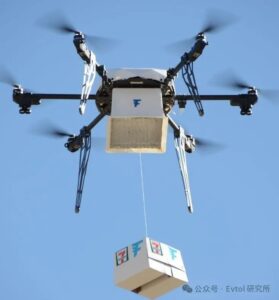
Unlike traditional electric vehicles, eVTOL exhibits three high requirements for batteries: high energy density, high power density, and high safety. These requirements stem from its unique flight scenarios and technical logic.
Energy density: eVTOL requires 10-15 times more power for vertical takeoff and landing than ground travel, and consumes up to 65 degrees of electricity per 100 kilometers (about 4 times that of a car), so higher energy density is needed to extend the range. The Ministry of Industry and Information Technology’s “Outline for the Development of Green Aviation Manufacturing Industry” clearly states that it is necessary to achieve mass production of 400Wh/kg lithium batteries by 2025 and exceed 500Wh/kg by 2030.
Power density: During the vertical takeoff and landing phase, a large current needs to be released instantly, and the battery needs to support a discharge rate of 5C or higher (such as the semi-solid state battery of Shanghai Xiba, which has achieved 5C discharge).
Safety: The aircraft has extremely low tolerance for thermal runaway and needs to reduce risks through technologies such as solid-state electrolytes and thermal management systems.
In addition, cycle life (at least 1000 cycles) and lightweight (reducing battery weight by 1kg can increase range by about 1.5 kilometers) are also core indicators.
◆ Technological evolution – from liquid to semi-solid state, all solid state batteries become the ultimate goal
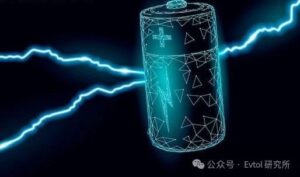
The current eVTOL battery technology roadmap presents a progressive development logic of “liquid state → semi-solid state → all solid state”
- Limitations of liquid batteries
The energy density of traditional liquid lithium batteries is close to the ceiling (about 300Wh/kg), making it difficult to meet the long-range requirements of eVTOL. For example, in the early days of CATL, the batteries provided to Fengfei Airlines supported a range of 250 kilometers, but their energy density was only 285Wh/kg.
- The transitional value of semi-solid state batteries
Semi solid state batteries achieve a balance between safety and energy density by introducing solid electrolytes such as oxides and sulfides.
Funeng Technology: The semi-solid state battery has an energy density of 330Wh/kg and a cycle life of over 4000 times. It has been awarded designated projects by customers such as Shanghai Times and Zero Gravity.
Xinwangda: The Gen2 aviation battery adopts semi-solid technology with an energy density of 380Wh/kg, suitable for urban travel, emergency rescue and other scenarios.
CATL: The energy density of condensed matter batteries (transitioning from liquid to semi-solid state) has reached 450Wh/kg and has entered the A-sample testing stage.
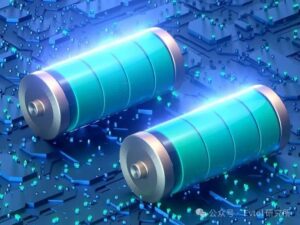
- The Future Potential of All Solid State Batteries
All solid state batteries (without liquid electrolytes) are considered the ultimate solution due to their complete elimination of thermal runaway risks and energy density exceeding 500Wh/kg. At present.
Japanese and Korean companies: Toyota and Samsung focus on the sulfide route, and the energy density of laboratory samples has exceeded 600Wh/kg.
Chinese companies: Weilan New Energy and Huineng Technology focus on the oxide route. The Yihang EH216-S is equipped with Xinjie Energy’s 480Wh/kg solid-state battery, which increases the range by 690%
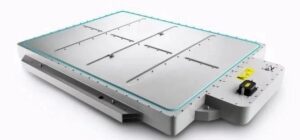
◆Industrial chain collaboration: deep binding between battery manufacturers and aircraft manufacturers
The research and development of eVTOL batteries is no longer a single breakthrough, but a “joint innovation” of the upstream and downstream of the industry chain.
- Technical collaboration: customized development
CATL and Fengfei Aviation jointly develop high-energy density aviation batteries, aiming to achieve a range of over 400 kilometers.
China Innovation Airlines and Xiaopeng Huitian: Collaborate to develop 350Wh/kg high-energy flight batteries, with plans to equip eVOLT models by 2026.
- Capital linkage: Strategic investment accelerates technology landing
Ningde Times strategically invests in Fengfei Aviation to promote the integrated design of batteries and aircraft. Yihang has invested in Xinjie Energy to lay out the supply chain of solid-state batteries, with plans to achieve mass production by the end of 2025.
- Standard Co construction: Airworthiness Certification and Safety System
The Civil Aviation Administration of China is collaborating with enterprises to develop airworthiness standards for eVTOL batteries, covering thermal runaway protection, extreme environmental testing, and more. For example, the battery system of Shanghai Fengfei has passed the triple safety verification of “needle punching, overcharging, and high-temperature storage”.
◆ Challenge and Future
Despite its broad prospects, eVTOL batteries still face multiple challenges
- Technical bottleneck: The interface impedance and cycle life issues of all solid state batteries have not been fully resolved.
- Cost pressure:The cost of semi-solid state batteries is 2-3 times that of liquid state batteries, and they need to be produced on a large scale to reduce prices.
- Lack of infrastructure:Ground charging networks and air traffic management systems still need to be built as supporting facilities.
The ‘heart revolution’ of low altitude economy
Every breakthrough in battery technology is redefining the possibilities of eVTOL. From material scientists to aircraft engineers, from policy makers to capitalists, this’ heart revolution ‘requires collaborative innovation across the entire industry chain. As Zhang Hong, Vice President of Yihang Intelligent, said, “Electric drive is not only a technological path, but also an inevitable choice for a zero emission future