

The global logistics industry is undergoing a silent revolution—powered not by trucks or ships, but by propellers. “Cargo drone”, once a futuristic concept, have rapidly evolved into critical components of modern supply chains. From delivering life-saving medical supplies to remote villages to enabling ultrafast e-commerce in densely populated urban centers, these unmanned aerial vehicles (UAVs) are breaking traditional barriers related to time, terrain, and traffic.
In 2025, the adoption of “cargo drone” technology is accelerating across sectors including healthcare, agriculture, industrial supply, and retail. Companies are leveraging drones to increase efficiency, reduce operational costs, and minimize their carbon footprint. According to recent market analyses, the commercial drone delivery sector is projected to grow at a compound annual growth rate (CAGR) of over 15% between 2024 and 2030, signaling a structural shift in how goods are transported globally.
What Is a “Cargo Drone”?
A “cargo drone” is an unmanned aircraft specifically engineered to transport goods. These are not consumer-grade drones; they are robust, reliable systems built for commercial and industrial applications. Key characteristics include significant payload capacity, extended flight range, advanced autonomous navigation, obstacle detection and avoidance, and redundant safety systems. Many models support vertical takeoff and landing (VTOL), enabling operations in confined spaces without the need for runways.
These drones utilize a combination of technologies including GPS, GLONASS, computer vision, LiDAR, and real-time communication systems to ensure accurate and safe deliveries, even in challenging environments such as dense urban settings or remote off-grid locations.
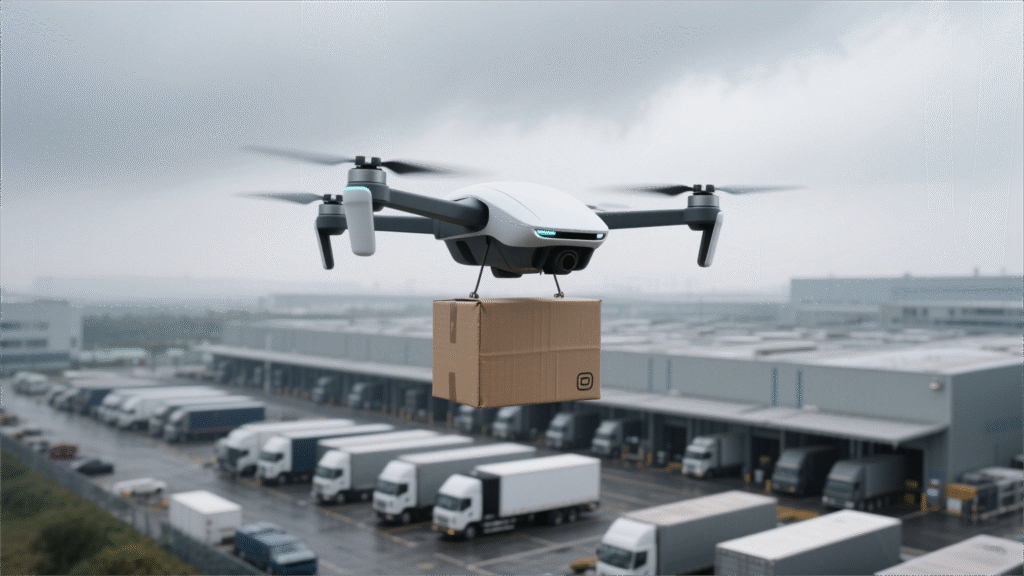
The market has diversified significantly, with platforms designed for everything from lightweight parcel delivery to heavy-lift industrial transport. Here are some of the most influential models this year:
**DJI FlyCart 30**: A versatile medium-lift drone capable of carrying up to 30 kg. It supports both traditional cargo box delivery and winch-assisted precision drops—ideal for construction sites, emergency response, and remote area logistics.
**Zipline P2**: This hybrid fixed-wing and multirotor system is focused largely on healthcare and retail logistics. It can service a 10-mile radius and perform deliveries in as little as 10 minutes. Zipline’s platform is deployed extensively in Africa and the U.S. in partnership with major healthcare providers and retailers like Walmart.
**Dronamics Black Swan**: A long-range, fixed-wing **cargo drone** that functions like an unmanned cargo aircraft. It can carry up to 350 kg over distances of 2,500 km, making it suitable for regional middle-mile logistics, effectively serving as a “cargo van of the sky.”
**EHang 216F**: Originally designed for passenger transport, this eVTOL (electric vertical takeoff and landing) drone has been adapted for heavy-lift cargo and emergency applications. It offers a 220 kg payload capacity and a range of up to 35 km, with quick response capabilities suited for urban operations.
**Amazon MK30 & Wing Delivery Drone**: These platforms are optimized for last-mile e-commerce delivery, with payloads around 2.3 kg. They are designed for quiet, safe operation in suburban and urban areas, using advanced sense-and-avoid technology to navigate complex environments.
*Data sourced from 2025 industry reports and manufacturer published specifications.*
How to Choose the Right “Cargo Drone” for Your Operations
Selecting a UAV is not a one-size-fits-all decision. Businesses must evaluate several key factors to identify the best platform for their specific use case:
Payload Capacity and Range: The most fundamental consideration. Assess the maximum weight you need to carry and the distance it must travel. Remember that actual flight time and range can be significantly affected by payload weight, wind conditions, and battery health.
Operational Environment: Will the drone operate in urban, rural, coastal, or extreme weather environments? Drones intended for harsh conditions should have high IP ratings for dust and water resistance, corrosion-resistant materials, and performance resilience in high wind or temperature extremes.
Type of Cargo and Delivery Mechanism:
– Standard packages: enclosed cargo boxes
– Fragile or time-sensitive items: temperature-controlled containers
– Inaccessible locations: winch or tether systems for no-landing delivery
– Oversized items: external slings or hooks
Regulatory Compliance: In most regions, operating a **cargo drone** requires adherence to strict aviation regulations. In the U.S., for example, drones over 25 kg are subject to additional FAA scrutiny, especially for beyond visual line of sight (BVLOS) operations. Ensure the drone model you select complies with local laws concerning registration, remote ID, pilot certification, and airspace permissions.
Safety and Redundancy: Look for platforms with built-in safety features such as:
– Obstacle avoidance sensors (360-degree LiDAR, vision, radar)
– Redundant power systems (dual batteries, backup motors)
– Parachute recovery systems
– Fail-safe communication links
Total Cost of Ownership: Beyond the initial purchase price, consider maintenance, insurance, charging infrastructure, software subscriptions for fleet management, and training costs

Market Outlook and Cost Structure
The “cargo drone” market is segmenting into multiple tiers based on capability and price:
– Light-Duty Drones (Payload < 5 kg): ~$5,000 – $30,000 Ideal for small parcel delivery, pharmaceuticals, and food.
– Medium-Lift Drones (Payload 5–50 kg): ~$30,000 – $70,000 Used in agriculture, public safety, and medium-scale logistics.
– Heavy-Lift Drones(Payload 50–150 kg): ~$70,000 – $150,000+ Suitable for construction, industrial inspection, and large-item delivery.
– Long-Range/Fixed-Wing Drones (Payload 150kg+): ~$200,000 – $1M+ Designed for regional logistics, often operating between distribution hubs.
The Sustainable Advantage
A significant driver behind the adoption of **cargo drones** is sustainability. Electric drones produce zero operational emissions, reduce road congestion, and lower energy use compared to traditional delivery vehicles. Companies using drones not only improve speed and efficiency but also reinforce their commitment to green logistics.
Conclusion: The Sky Is Not the Limit
“Cargo drones” are transforming logistics from a ground-based operation to a multi-dimensional system. They offer unmatched advantages in speed, accessibility, and environmental impact.For businesses considering integration, the key is to start with a clear operational need, navigate the regulatory landscape, and choose a platform that aligns with long-term logistical goals.
As battery technology, artificial intelligence, and unmanned traffic management (UTM) systems continue to advance, the role of “cargo drones” will keep expanding—making the sky an integral part of the global supply chain.Interested in optimizing your “cargo drone” operations with high-energy-density battery solutions? Contact us at sales@uniquepower.com for custom power systems designed for reliability, safety, and endurance.
