
From Selling Aircraft to Building Complete Low-Altitude Aviation Networks
A plan to procure 260 eVTOL aircraft and 10 zero-carbon water-based vertiports is more than an impressive headline.
It may signal an important change in how Chinese eVTOL manufacturers approach international markets.
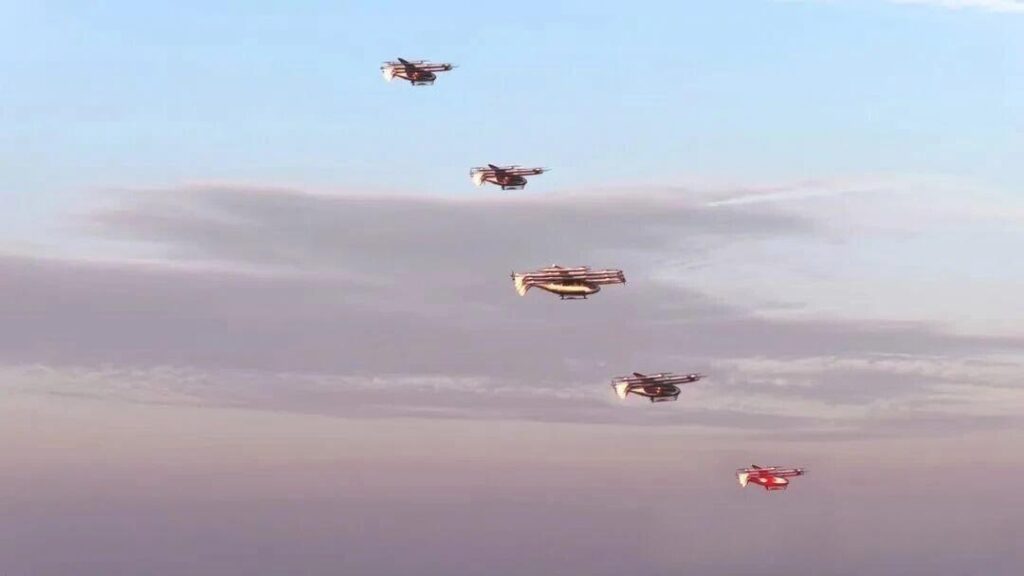
On October 15, 2026, China’s AutoFlight announced a strategic Memorandum of Understanding with Singapore-based JC Aviation, covering the planned procurement of 260 eVTOL aircraft and 10 SUNSHIP water-based platforms between 2026 and 2031.
The agreement includes three aircraft models: the V2000CG CarryAll cargo eVTOL, V2000CGF firefighting eVTOL, and V2000EM Prosperity passenger eVTOL.
The initial confirmed commitment covers two V2000CG aircraft and one SUNSHIP platform. The remaining planned purchases are subject to subsequent agreements.
But the most interesting part isn’t the number of aircraft.
It’s the business model behind the agreement.
01 | 260 Aircraft Over Five Years: What Does It Really Mean?
Spread across five years, 260 aircraft would represent an average of approximately 52 aircraft annually.
For an emerging eVTOL manufacturer, that could create meaningful demand for production capacity, suppliers, and long-term service support.
However, the key challenge is converting the broader MoU into firm orders and actual deliveries.
The initial commitment is relatively small. The real commercial opportunity lies in the potential fleet expansion over the following years.
More importantly, this cooperation goes beyond aircraft sales.
It includes certification support, personnel training, maintenance, and local operational capabilities.
This creates opportunities for longer-term customer relationships through spare parts, technical support, training, and maintenance services.
Selling an aircraft generates a transaction. Supporting an operating fleet creates a long-term business relationship.
02 | Why Certification Makes the Difference
In aviation, technical performance alone is not enough.
An aircraft may offer excellent payload capacity, range, and operating efficiency, but commercial deployment depends on regulatory approval.
AutoFlight’s V2000CG CarryAll has already obtained three important Chinese aviation certificates:
- TC — Type Certificate
- PC — Production Certificate
- AC — Airworthiness Certificate
In June 2026, the V2000CG also received a Validated Type Certificate (VTC) from Indonesia’s Directorate General of Civil Aviation.
According to AutoFlight, it became the first eVTOL aircraft to receive overseas type certificate validation.
This is a significant milestone.
It demonstrates that the aircraft has progressed beyond domestic certification and entered an international regulatory validation process.
However, certification in Indonesia does not automatically authorize operations in India, Brazil, or other countries.
Each market has its own regulatory requirements.
Certification is not the final destination, but it is an essential foundation for international commercialization.

03 | From Selling Aircraft to Exporting an Operating Ecosystem
Traditionally, many aircraft manufacturers entering overseas markets have focused on demonstrating aircraft performance and securing initial purchases.
The AutoFlight–JC Aviation cooperation suggests a broader approach.
The objective is not simply to deliver aircraft.
It is to help establish an operational ecosystem.
That includes aircraft, infrastructure, training, maintenance, and local support.
The SUNSHIP water-based platform is particularly interesting because it extends the offering beyond the aircraft itself.
For markets with islands, coastal communities, and challenging transportation infrastructure, water-based operating facilities could provide additional deployment options.
The initial cooperation will focus on India and Brazil, with potential expansion into Central and Latin America.
This reflects a practical business consideration.
Customers do not necessarily want to purchase an aircraft and then independently solve every infrastructure, training, and maintenance problem.
They want an operational solution.
Aircraft exports are product sales. Integrated aviation solutions are ecosystem development.
The second model may create deeper customer relationships and additional service opportunities, although its commercial success will depend on execution.
04 | Why Emerging Markets Could Be a Smart Starting Point
The United States and Europe remain important advanced air mobility markets.
However, their certification and commercialization pathways can be complex, expensive, and time-consuming.
Emerging markets may offer different opportunities.
India, Brazil, Indonesia, and other countries have transportation needs that could make certain eVTOL applications attractive.
Potential use cases include:
- Regional cargo logistics
- Island and coastal transportation
- Emergency supply delivery
- Aerial firefighting
- Specialized passenger transportation
Rather than competing exclusively for the same early markets as Western eVTOL developers, Chinese manufacturers can explore locations where their aircraft and operating solutions address specific infrastructure needs.
This does not mean emerging markets have fewer safety requirements or easier regulatory approval.
It means their operational needs, customer structures, and commercial opportunities may be different.
A successful overseas deployment could provide valuable experience in aircraft reliability, maintenance, infrastructure integration, and local operations.
That experience may support expansion into other markets.
The Real Test: Can AutoFlight Deliver?
The agreement represents an important commercial opportunity.
But an MoU is not the same as 260 delivered aircraft.
The next five years will test AutoFlight’s ability to turn planned procurement into actual operations.
Key challenges include production capacity, overseas certification, delivery schedules, local maintenance networks, infrastructure deployment, and financial execution.
For the wider eVTOL industry, the lesson is equally important.
The next stage of competition may not be determined solely by aircraft specifications.
It may increasingly depend on who can deliver a complete, reliable, and commercially sustainable operating system.
The opportunity is no longer just to sell aircraft overseas.
It is to build an aviation business that can operate overseas.
Winning an order is a milestone. Delivering the aircraft, infrastructure, and long-term support is what turns that milestone into a sustainable business.
Source: AutoFlight official announcement, October 15, 2026; AutoFlight V2000CG Indonesian certification announcement, June 11, 2026.