
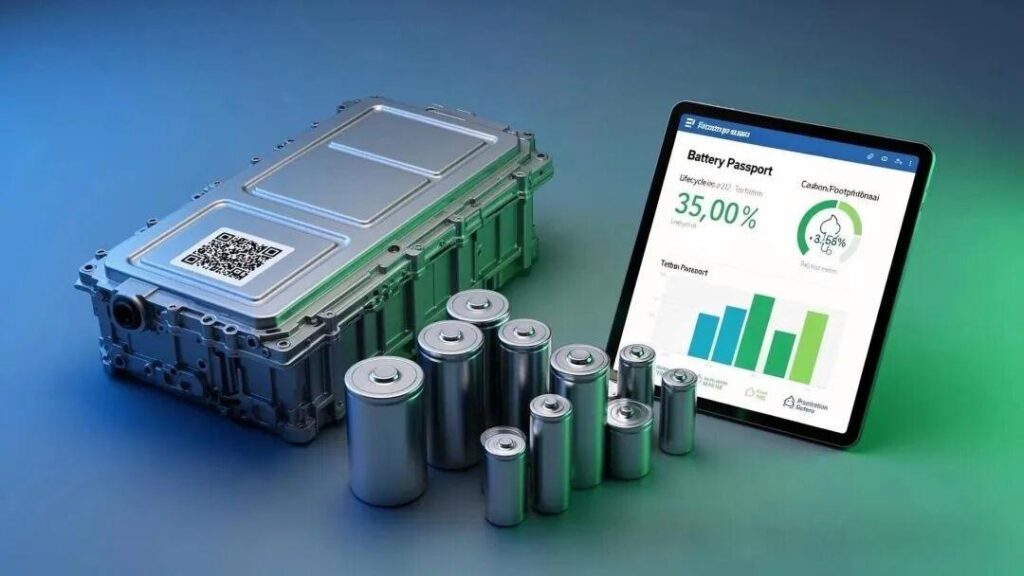
From UN38.3 and shipping documents to digital traceability, lifecycle data, and supply chain transparency
For many years, lithium battery exporters have focused on a familiar set of documents:
- UN38.3 test reports
- Safety Data Sheets (SDS/MSDS)
- Dangerous goods declarations
- Transport packaging and labeling
- Product specifications and safety certifications
These documents remain important.
But for certain batteries entering the European Union, another requirement is approaching.
From February 18, 2027, qualifying batteries placed on the EU market or put into service must have a Digital Battery Passport.
Under Regulation (EU) 2023/1542, this requirement applies to electric vehicle batteries, light means of transport (LMT) batteries, and industrial batteries with a capacity greater than 2 kWh.
The change represents more than another compliance document.
It introduces a new way of managing battery information throughout the product lifecycle.
For manufacturers, battery pack assemblers, importers, and international distributors, the message is becoming increasingly clear:
Future competitiveness in the European battery market will depend not only on battery performance and price, but also on product traceability, data quality, and supply chain transparency.
1. What Is the EU Digital Battery Passport?
A Digital Battery Passport is an electronic record linked to an individual battery.
It is designed to make relevant information available throughout the battery’s lifecycle, from market introduction to use, maintenance, reuse, and recycling.
The passport is linked to the battery through a QR code and a unique identifier.
Depending on the battery category and applicable requirements, the information may include:
- Battery manufacturer and responsible economic operator
- Battery identification and technical specifications
- Battery model and individual identification
- Electrochemical performance and durability
- Battery health information
- Material composition
- Information relevant to repair and dismantling
- Recycling and end-of-life information
- Carbon footprint and recycled-content information when the relevant obligations apply
Not every data field will be mandatory for every battery from February 2027.
The EU has established different information categories and application dates.
Access is also differentiated.
Certain information will be publicly accessible, while other information will be available only to authorized authorities or parties with a legitimate interest.
The battery passport is therefore not simply a public product datasheet. It is a structured digital information system with different access rights.
2. Why Is the EU Introducing Battery Passports?
The global battery supply chain is complex.
A typical lithium battery may involve:
Mineral Extraction
↓
Raw Material Processing
↓
Cell Manufacturing
↓
Battery Pack Assembly
↓
Distribution and Import
↓
Operation and Maintenance
↓
Reuse or Recycling
These stages may take place across several countries and involve numerous companies.
Historically, information about material sourcing, production processes, performance, and end-of-life treatment has often been fragmented.
The EU Battery Passport aims to improve access to relevant information and support the broader objectives of the Batteries Regulation.
These include:
1. Supply Chain Transparency
Improving the availability and traceability of information about batteries and their components.
2. Environmental Sustainability
Supporting the assessment of battery-related environmental impacts.
3. Circular Economy
Making information more accessible for repair, repurposing, and recycling.
4. Product Accountability
Helping relevant economic operators and authorities identify batteries and access applicable technical information.
5. Better Lifecycle Management
Supporting more informed decisions about battery use, maintenance, and end-of-life treatment.
The important shift is from treating a battery only as a product sold at a particular moment to treating it as a product with information that remains relevant throughout its lifecycle.
3. Which Batteries Will Require a Digital Battery Passport?
This is one of the most important questions for exporters.
Not every lithium battery will automatically require a Battery Passport from February 18, 2027.
Article 77 of Regulation (EU) 2023/1542 identifies three main categories.
Battery categoryBattery Passport requirement from February 18, 2027Electric vehicle (EV) batteriesYesLight means of transport (LMT) batteriesYesIndustrial batteries with capacity greater than 2 kWhYesIndustrial batteries of 2 kWh or lessNot covered by the Article 77 passport thresholdOrdinary portable batteriesNot generally covered by the initial Article 77 passport obligation
The classification of a battery depends on its intended application and the definitions in the Regulation.
For example, LMT batteries are associated with qualifying electrically powered wheeled transport, such as certain e-bikes and e-scooters.
Industrial batteries cover a broader range of applications, including batteries specifically designed for industrial use.
Battery classification should be determined before evaluating the passport obligation.
4. Electric Vehicle Manufacturers and Battery Suppliers
Electric vehicle batteries are one of the most directly affected categories.
Relevant businesses include:
- Electric vehicle manufacturers
- EV battery pack suppliers
- Battery system integrators
- Importers
- Companies placing EV batteries on the EU market
For these businesses, compliance planning will increasingly involve both physical battery requirements and digital information management.
Manufacturers and suppliers may need to coordinate information across multiple stages of the supply chain.
For example, the company assembling the final battery pack may require technical and material information from upstream cell and component suppliers.
The organization responsible for placing the finished battery on the EU market must ensure that applicable passport obligations are fulfilled.
This means data-sharing arrangements between suppliers and customers will become increasingly important.
5. Industrial Energy Storage and Large Battery Systems
Another important category is industrial batteries with a capacity greater than 2 kWh.
This can include qualifying batteries used in:
- Industrial energy storage
- Commercial backup power systems
- Industrial machinery
- Renewable energy storage
- Industrial automation
- Other industrial applications
For example, consider a rechargeable industrial battery pack rated at:
51.2 V × 100 Ah = 5,120 Wh
That is:
5.12 kWh
If it is classified as an industrial battery and placed on the EU market after the applicable date, it falls within the capacity threshold for the Battery Passport obligation.
However, companies should not evaluate compliance using capacity alone.
They must also determine the correct battery category and the applicable regulatory requirements.
6. What About Industrial Drone Batteries?
This question deserves particular attention.
Industrial UAV batteries are used in applications such as:
- Infrastructure inspection
- Agricultural operations
- Mapping and surveying
- Cargo transportation
- Emergency response
- Security operations
- Long-range fixed-wing UAVs
- Heavy-lift multirotors
- eVTOL aircraft
Under the EU Batteries Regulation, batteries designed for industrial applications can fall within the industrial battery category.
The Regulation also recognizes batteries used for aviation traction within the broader industrial battery framework.
Therefore, industrial UAV battery suppliers should not assume that drone batteries are automatically outside the Regulation.
However, the passport requirement depends on classification and capacity.
Example A: A Small UAV Battery
A hypothetical battery rated at:
22.2 V × 20 Ah = 444 Wh
This is below 2 kWh.
Even if classified as an industrial battery, it does not meet the Article 77 capacity threshold for an industrial Battery Passport.
Other applicable battery and transport requirements may still apply.
Example B: A Heavy-Lift UAV Battery
Consider a battery rated at:
50 V × 50 Ah = 2,500 Wh
That equals:
2.5 kWh
If classified as an industrial battery and placed on the EU market within the scope of the Regulation, it would meet the capacity threshold for the Battery Passport requirement.
Example C: An eVTOL Battery System
Larger electric aircraft may use battery systems with substantially higher energy capacities.
Depending on their classification and regulatory scope, these batteries may require detailed compliance planning under the industrial battery provisions.
For UAV OEMs and battery suppliers, the key questions are:
What is the battery’s intended use?
How is the battery classified?
What is its rated energy capacity?
Who is placing the finished battery on the EU market?
These questions should be answered during product development—not after the battery is ready for shipment.
7. Which Companies in the Supply Chain Will Be Affected?
The Battery Passport does not affect only cell manufacturers.
Its implementation has implications across the supply chain.
Battery Cell Manufacturers
Cell suppliers may need to provide reliable technical and material information to downstream battery manufacturers.
Relevant data may include:
- Cell identification
- Cell chemistry
- Material composition
- Technical performance
- Applicable sustainability information
Battery Pack Assemblers
Pack assemblers may need to integrate information from different cell and component suppliers into a finished battery record.
They must also manage pack-specific information, such as:
- Battery configuration
- Rated capacity
- Voltage
- Identification
- Performance characteristics
- Applicable maintenance and dismantling information
Battery Exporters and Trading Companies
Companies sourcing batteries from different manufacturers may face a particular challenge.
They must coordinate information across multiple suppliers.
If suppliers use inconsistent documentation formats or cannot provide reliable data, the exporter may experience difficulties supporting the compliance requirements of European customers.
EU Importers and Distributors
Importers and other responsible economic operators need to understand their obligations when placing batteries on the EU market.
They may need to verify that the required information and identification systems are available.
Equipment Manufacturers and System Integrators
Companies integrating batteries into industrial equipment, vehicles, or UAVs may need to coordinate battery-related compliance requirements with their suppliers.
The company responsible for the finished battery passport may depend on the specific market-placement arrangement, but upstream suppliers will still play an important role in providing accurate information.
8. Battery Passport vs. UN38.3: Two Different Compliance Questions
This distinction is particularly important for international battery exporters.
UN38.3 and the Digital Battery Passport address different aspects of battery compliance.
UN38.3
UN38.3 relates to testing requirements for lithium cells and batteries under the UN Manual of Tests and Criteria.
It supports safe transport under the applicable dangerous goods framework.
Safety Data Sheets
SDS documents communicate relevant hazard and safety information.
Their role and required use depend on the product and applicable regulations.
Dangerous Goods Transport Rules
Transport requirements govern matters such as:
- Classification
- Packaging
- Marking
- Labeling
- Documentation
- Carrier acceptance
Digital Battery Passport
The Battery Passport is primarily concerned with structured battery information and lifecycle traceability under EU product regulation.
The difference can be summarized as follows:
QuestionRelevant compliance areaCan this battery be transported under the applicable rules?Dangerous goods transport complianceHas the lithium battery completed the applicable UN38.3 testing?UN38.3Are the appropriate safety and hazard documents available?SDS and applicable documentationDoes this battery require an EU digital passport?EU Batteries Regulation, Article 77Is the required lifecycle information available?Battery Passport and related EU requirements
A Battery Passport does not replace UN38.3.
And an UN38.3 report does not establish Battery Passport compliance.
Exporters need to manage both areas separately.
9. How Will the Battery Passport Change International Battery Trade?
Traditionally, many battery exporters have focused on whether a shipment can be accepted by an airline, freight forwarder, or shipping company.
Common problems include:
- Missing UN38.3 documentation
- Inconsistent model numbers
- Outdated documents
- Incorrect dangerous goods classification
- Packaging or labeling problems
- Differences between shipment information and technical documents
These issues will remain important.
But the Battery Passport introduces another dimension:
Can the product be supported with accurate, traceable digital information for the target market?
For international suppliers, this may affect:
- Customer qualification
- Supplier selection
- Documentation review
- Product identification
- Supply chain cooperation
- Long-term customer relationships
A manufacturer offering competitive pricing but poor information traceability may become less attractive to customers with demanding compliance systems.
10. Carbon Footprint and Recycled Content: Important, but Not All Mandatory on Day One
The EU Batteries Regulation includes provisions addressing carbon footprint, recycled content, and supply chain due diligence.
However, these obligations do not all become mandatory on February 18, 2027.
Their application dates and detailed requirements differ.
The European Commission’s Battery Passport guidance clarifies that some information fields will not yet be required when the passport system first becomes mandatory.
This is important because businesses should avoid two opposite mistakes.
Mistake 1: Assuming every sustainability data field must be completed immediately in February 2027.
Mistake 2: Assuming these requirements can be ignored until the final deadline.
The more practical approach is to establish a data collection framework early, while tracking the application dates of each obligation.
That allows companies to prepare progressively rather than rebuilding their systems repeatedly.
11. Why Supplier Traceability Will Become More Valuable
Consider a battery pack assembled using:
- Cells from one manufacturer
- A BMS from another supplier
- Connectors from a third supplier
- A charger from a fourth supplier
The finished battery supplier may need to collect information from several companies.
If the cell supplier changes, the available technical and sustainability data may also change.
This creates a practical supply chain management challenge.
Companies should be able to answer questions such as:
- Which cell model is used?
- Who manufactured the cells?
- Can the relevant material information be obtained?
- Are the technical documents consistent?
- Can battery identification be linked to production records?
- Can information be updated when required?
The objective is not necessarily to make every supplier’s confidential information publicly available.
It is to ensure that required information can be managed and disclosed according to the applicable access rules.
Traceability becomes a supply chain capability, not simply an administrative task.
12. What Should Chinese Battery Exporters Do Now?
Companies exporting batteries to Europe should begin with a practical compliance review.
Step 1: Classify the Battery
Determine whether the product is:
- An EV battery
- An LMT battery
- An industrial battery
- A portable battery
- Another category under the Regulation
Step 2: Confirm Battery Capacity
For industrial batteries, verify whether the capacity exceeds 2 kWh.
Step 3: Identify the Responsible Economic Operator
Clarify who places the finished battery on the EU market and who is responsible for fulfilling the applicable passport obligations.
Step 4: Review Existing Product Data
Check the availability and consistency of:
- Product model information
- Technical specifications
- Manufacturing identification
- Performance data
- Safety documentation
- Supplier information
Step 5: Establish Supplier Data Cooperation
Communicate early with cell manufacturers, pack assemblers, and other relevant suppliers.
Step 6: Prepare Digital Information Management
Evaluate how battery records, identifiers, QR codes, and relevant data access can be managed.
Step 7: Monitor Regulatory Updates
Follow the European Commission’s guidance, implementing acts, and technical requirements.
This process should begin well before the planned market-entry date.
13. Does This Regulation Apply to the Philippines and Malaysia?
The EU Battery Passport requirement is an EU market-access obligation.
It does not automatically apply to batteries imported into the Philippines, Malaysia, or other non-EU markets.
However, international battery exporters should still pay close attention to documentation quality and transport compliance.
Lithium batteries shipped to Southeast Asia remain subject to applicable transport rules and destination-market requirements.
Depending on the shipment, exporters may need to address:
- UN numbers, such as UN3480 or UN3481
- UN38.3 testing
- Applicable SDS information
- Dangerous goods packaging
- Labels and markings
- Carrier acceptance
- Import documentation
A well-organized documentation system can support exports to multiple markets, even when the legal requirements differ.
EU product compliance and international dangerous goods transport compliance are different obligations, but both benefit from reliable technical information.
14. A Practical Example: An Industrial UAV Battery Supplier
Imagine a company supplying customized lithium battery packs for industrial UAV manufacturers.
Its products include:
Battery A: 12S, 20 Ah
Battery B: 14S, 40 Ah
Battery C: 14S, 60 Ah
Assuming a nominal cell voltage of 3.7 V:
Battery A:
44.4 V × 20 Ah = 888 Wh
Battery B:
51.8 V × 40 Ah = 2,072 Wh
Battery C:
51.8 V × 60 Ah = 3,108 Wh
The three batteries may serve similar industrial UAV applications.
But their capacity values differ significantly.
Battery A is below 2 kWh.
Battery B is slightly above 2 kWh.
Battery C is well above 2 kWh.
If all three are classified as industrial batteries, Batteries B and C would meet the capacity threshold for the Battery Passport obligation, while Battery A would not.
This example demonstrates why regulatory evaluation should occur at the individual product level.
Similar applications do not necessarily mean identical compliance requirements.
15. Battery Data Management May Become a Competitive Advantage
The Battery Passport is often discussed as a regulatory burden.
But it may also influence how customers evaluate battery suppliers.
Consider two suppliers offering comparable battery performance.
Supplier A provides:
- Competitive pricing
- Basic specifications
- Transport documentation
Supplier B provides:
- Competitive technical performance
- Consistent product identification
- Traceable supplier records
- Structured technical data
- Clear documentation processes
- Support for applicable compliance information
For European OEMs and system integrators, Supplier B may be easier to integrate into a long-term supply chain.
This does not mean every supplier must develop its own proprietary Battery Passport platform.
It means companies should understand what information they need, who provides it, and how it will be maintained.
The ability to organize and support battery information may become an important part of supplier competitiveness.
16. The Bigger Trend: Battery Compliance Is Expanding Beyond Transportation
For many years, the central question in lithium battery exports was:
“Can this battery be shipped safely?”
That question remains essential.
But for qualifying products entering the European market, companies must increasingly ask:
“Can this battery meet the applicable product, information, and lifecycle requirements?”
This represents a broader change in international battery trade.
Battery suppliers are moving from a documentation model centered on individual shipments toward a more comprehensive approach involving:
Product Identification
↓
Technical Documentation
↓
Supply Chain Information
↓
Lifecycle Data
↓
Repair and Recycling Information
The transition will require cooperation between manufacturers, pack assemblers, importers, and downstream equipment suppliers.
Conclusion: The Battery Passport Is More Than a QR Code
The EU Digital Battery Passport should not be understood as simply attaching a QR code to a battery.
The QR code is an access mechanism.
The real challenge is the information behind it.
For battery manufacturers and exporters, the important questions are:
Can the battery be identified accurately?
Can its technical information be verified?
Can relevant supply chain information be obtained?
Can required data be maintained and updated?
Can the responsible economic operator support the applicable EU requirements?
From February 18, 2027, these questions will become particularly important for EV batteries, LMT batteries, and industrial batteries above 2 kWh entering the EU market.
For industrial drone battery suppliers, the impact will depend on battery classification and capacity.
For international exporters, the broader message is clear:
Battery performance determines whether a product can meet an application’s technical requirements.
Compliance and traceability increasingly determine whether it can participate in a particular market.
The next generation of battery competition will involve more than energy density, discharge rate, cycle life, and price.
It will also involve the quality of the information that travels with the battery.
And that information may become just as important to long-term customer relationships as the battery itself.
References
[1] European Parliament and Council of the European Union. Regulation (EU) 2023/1542 concerning batteries and waste batteries. In particular, Article 3 (Definitions), Article 77 (Battery Passport), and Annex XIII.
https://eur-lex.europa.eu/eli/reg/2023/1542/oj
[2] European Commission. Digital Product Passport for Batteries. Official implementation overview and scope.
https://single-market-economy.ec.europa.eu/single-market/digital-product-passport/batteries_en
[3] European Commission. Guidance to Support Preparations for the Digital Batteries Passport. Published August 21, 2026.
[4] European Commission. EU Digital Product Passport FAQ for Batteries. Guidance on implementation timelines, data requirements, and applicability.
[5] European Commission Joint Research Centre. Carbon Footprint Rules for Batteries under Regulation (EU) 2023/1542.
https://eplca.jrc.ec.europa.eu/EU_BatteryRegulation_Art7.html
Regulatory information reviewed: October 14, 2026. Companies should check the latest official legislation and implementation guidance before making compliance decisions.
#EUBatteryPassport #DigitalBatteryPassport #EUBatteryRegulation #BatteryCompliance #LithiumBattery #BatteryExport #BatterySupplyChain #BatteryTraceability #IndustrialBattery #DroneBattery #UAVBattery #EnergyStorage #BatterySustainability #BatteryEngineering