
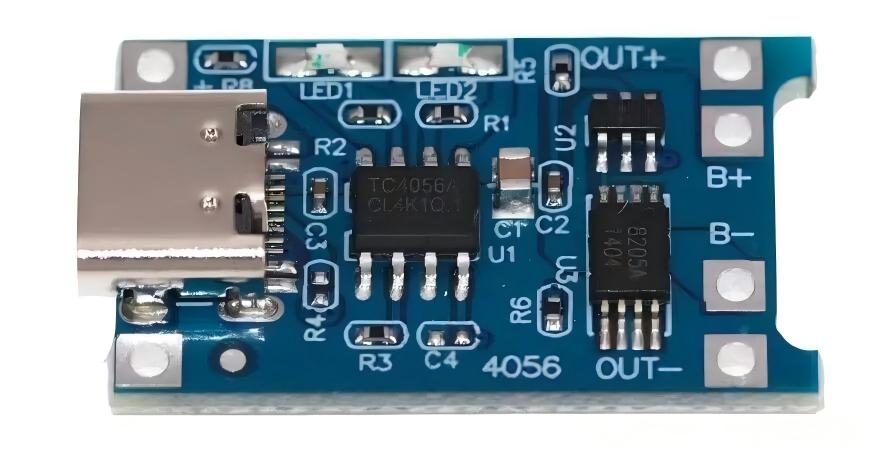
If you’re new to lithium batteries, building battery packs, upgrading power systems, or sourcing battery solutions, you’ve probably encountered two terms repeatedly:
PCM (Protection Circuit Module) and BMS (Battery Management System).
Many people use these terms interchangeably.
They shouldn’t.
Confusing a PCM with a BMS isn’t just a technical mistake—it can lead to reduced battery life, system failure, or even serious safety risks.
A Simple Analogy
Think of a PCM as a personal bodyguard.
Its job is straightforward: step in when danger appears.
A BMS, however, is more like an entire property management system.
It doesn’t just provide security—it manages maintenance, monitors daily operations, coordinates resources, and keeps everything running efficiently.
Both improve safety, but they operate on completely different levels.
What Is a PCM?
A Protection Circuit Module (PCM) is a compact electronic protection circuit designed primarily for a single lithium-ion cell.
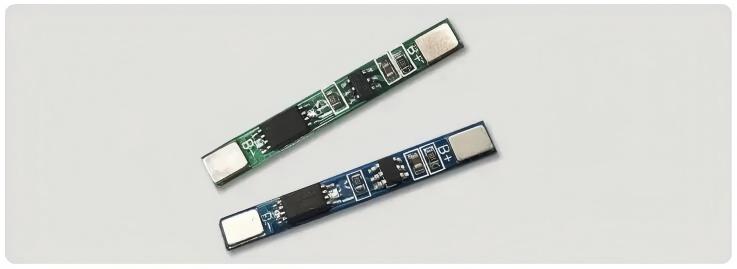
Its mission is simple:
Protect the battery from catastrophic operating conditions.
Typical PCM functions include:
✅ Overcharge protection
✅ Over-discharge protection
✅ Over-current protection
✅ Short-circuit protection
Once an abnormal condition is detected, the PCM simply disconnects the battery to prevent damage.
It acts like an emergency switch.
That’s where its responsibility ends.
A PCM does not monitor battery health, optimize performance, or manage multiple cells.
What Is a BMS?
A Battery Management System (BMS) is a comprehensive control system designed for multi-cell battery packs, typically two or more cells connected in series.
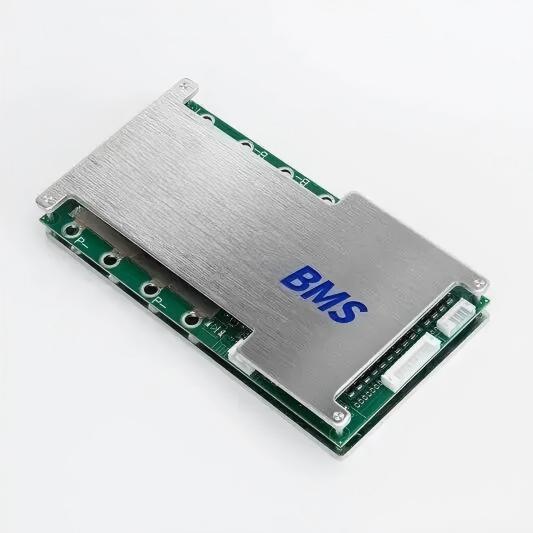
Instead of simply preventing accidents, a BMS continuously manages the battery throughout its entire life cycle.
Modern BMS platforms typically provide:
- Individual cell voltage monitoring
- Battery balancing
- Multi-point temperature monitoring
- Charge and discharge control
- State of Charge (SOC) estimation
- Fault diagnosis
- Communication with chargers, inverters, vehicles, or control systems
- Data logging and system diagnostics
In other words, a BMS doesn’t simply protect the battery.
It actively improves battery performance, safety, and longevity.
The Biggest Difference: Cell Balancing
One feature separates a professional BMS from a basic protection board more than any other.
Cell balancing.
No two lithium-ion cells age at exactly the same rate.
After hundreds of charge cycles, small voltage differences begin to appear between cells.
Without correction:
- One cell reaches overcharge first.
- Another reaches over-discharge first.
- Overall pack capacity decreases.
- Battery aging accelerates.
- Safety margins shrink.
A BMS continuously balances individual cell voltages—either through passive or active balancing—to keep the pack operating as a unified system.
This significantly extends battery cycle life while improving overall reliability.
A PCM has no balancing capability.
Thermal Management Matters
Temperature is one of the biggest factors affecting lithium battery performance.
A professional BMS monitors multiple temperature sensors and can automatically:
- Reduce charging current at high temperatures
- Limit discharge power under heavy load
- Prevent charging at low temperatures
- Disconnect the battery under critical conditions
Many basic PCM boards either lack temperature sensing entirely or provide only very simple thermal cutoff protection.
For applications such as industrial drones, electric vehicles, robotics, and energy storage systems, advanced thermal management is essential—not optional.
Single Cell vs. Battery Pack
Another major distinction lies in the intended application.
PCM is designed for:
- Single-cell lithium batteries
- Consumer electronics
- Small portable devices
- Low-power applications
BMS is designed for:
- Multi-cell battery packs
- Electric vehicles
- Industrial drones
- Energy storage systems
- Robotics
- Marine batteries
- Telecom backup power
- High-power industrial equipment

As battery voltage and power increase, battery management becomes exponentially more complex.
That’s exactly where a BMS becomes indispensable.
Why Multiple PCM Boards Cannot Replace a BMS
A common misconception among DIY builders is that several single-cell protection boards can replace a multi-cell BMS.
They cannot.
Each PCM only monitors its own cell independently.
None of them understands the condition of the battery pack as a whole.
Without centralized management, problems quickly emerge:
- Cell imbalance
- Protection conflicts
- Uneven charging
- Uneven discharging
- Reduced capacity
- Shortened battery life
- Increased safety risk
This is why professionally designed battery packs always use a dedicated BMS rather than multiple independent protection boards.
Choosing the Right Solution
The selection is actually straightforward.
Choose a PCM when:
- You are protecting a single lithium-ion cell.
- Cost and simplicity are the priorities.
- No communication or battery diagnostics are required.
Choose a BMS when:
- Your battery pack contains two or more cells in series.
- Reliability and cycle life matter.
- High power is required.
- Thermal management is important.
- Battery data, diagnostics, or communications are needed.
Final Thoughts
A PCM protects.
A BMS manages.
That single distinction explains almost everything.
As lithium batteries continue powering drones, electric vehicles, energy storage systems, robotics, and next-generation mobility, battery management is becoming just as important as battery chemistry itself.
The smartest battery isn’t simply the one with the highest energy density.
It’s the one with the intelligence to operate safely, balance itself, protect every cell, and maximize its service life.

Understanding the difference between a Protection Circuit Module and a Battery Management System is one of the most fundamental—and most valuable—steps toward designing safer and more reliable battery-powered products.
How do you see the future of battery management? Will software and AI become as important as battery chemistry itself? I’d love to hear your thoughts in the comments.