
The Hidden “Final Exam” Behind Every Lithium-Ion Battery Pack
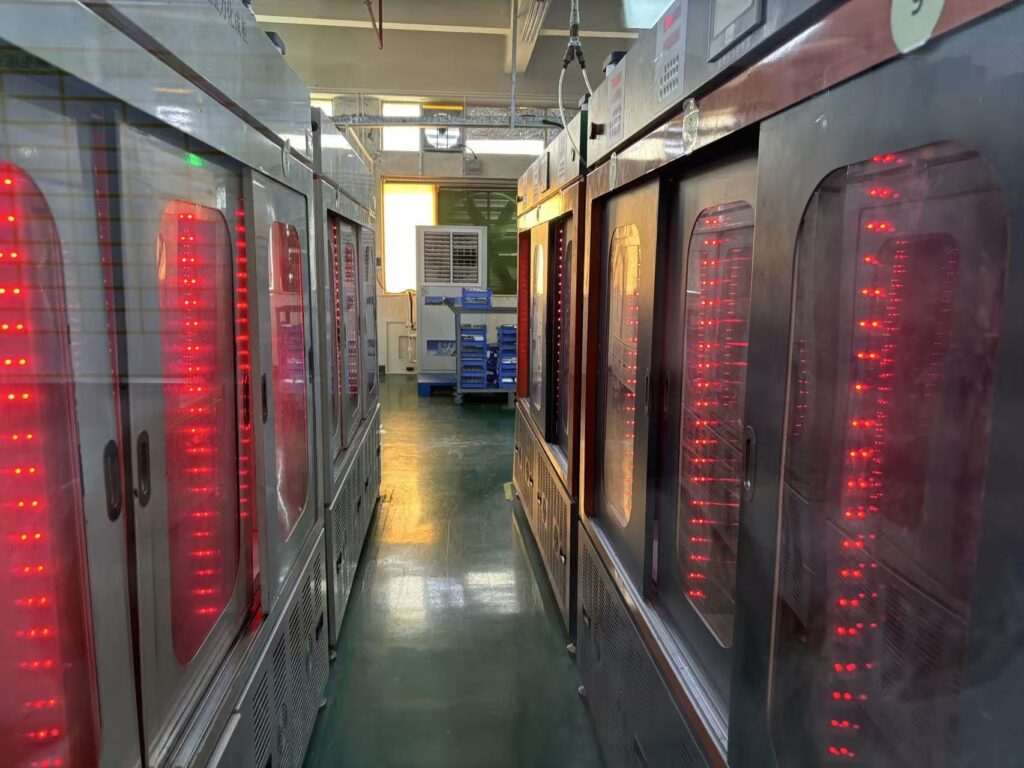
When people talk about lithium-ion batteries, they usually focus on chemistry, energy density, or cycle life. But in real manufacturing, there is a critical final step that quietly determines whether a cell is truly reliable: capacity grading (often called “cell sorting” or “binning”).
A useful way to understand it is simple:
👉 It is the “final exam” of battery manufacturing.
1. What Is Capacity Grading?
In production, every lithium-ion cell goes through a standardized process:
- Fully charged
- Fully discharged
- Measured for actual capacity output
At the same time, the system records:
- Internal resistance (IR)
- Charge/discharge curves
- Self-discharge behavior
Based on these results, each cell is classified into different performance grades—similar to how students are ranked after an exam.
In other words:
Capacity grading is the process of turning raw battery cells into categorized “performance groups” based on real test data.
2. Why Capacity Grading Is Necessary
1) To prevent the “weakest link effect”
Even cells from the same production batch are never identical.
If you connect:
- 1000 mAh cell + 950 mAh cell (in series)
The smaller one will discharge first.
Then:
- It may be forced into reverse charging
- It accelerates degradation
- It can generate heat, swelling, or even safety risks
This is the classic “bucket effect” in battery packs.
Capacity grading ensures:
Only cells with highly similar performance are grouped together.
2) For quality control and traceability
Grading does more than sorting—it also records:
- Batch origin
- Equipment used
- Full performance data history
This allows manufacturers to trace every cell back to:
“When it was made, tested, and classified”
It is a key foundation of modern battery quality systems.
3. Not Every Battery Deserves Grading
Capacity grading is not a repair process.
It is a selection system, not a transformation system.
It is only suitable for:
- New or near-new A-grade cells
- Same model
- Same manufacturer
- Same batch
Why?
Because grading equipment is expensive:
- Automated charge/discharge systems
- Thermal-controlled chambers
- Data acquisition infrastructure
A full cycle can take hours per cell, consuming significant energy and time.
If applied to:
- Used cells
- Mixed batches
- Low-quality recycled cells
The result is simple:
Poor ROI and unreliable classification results.
⚠️ This is why low-cost “graded batteries” in the market are often misleading.
In many cases, they are only run-through-tested, not truly precision-graded under strict industrial standards.
4. Why the Process Is So Complex
It is NOT “battery activation”
A common misconception is that new batteries need “activation cycles.”
That belongs to older nickel-based battery technology.
For lithium-ion cells:
- They are already pre-conditioned before shipping
- Cycling during grading is purely for measurement, not activation
Temperature control is critical
Battery measurement is highly temperature-sensitive.
Even:
- ±1°C temperature change
→ can cause ~1% capacity deviation
That is why professional grading lines operate in:
- Constant temperature environments
- Controlled humidity conditions
Aging (resting) is required
After grading:
- Cells must rest for 7–15 days
- Then re-tested for voltage stability
This step identifies:
- Hidden self-discharge issues
- Micro-defects not visible in initial testing
Many low-end processes skip this step entirely.
5. Capacity Grading vs Pack-Level Matching
These two are often confused, but they are different stages:
Capacity Grading (Cell Level)
- Measures absolute performance of each cell
- Output: capacity, IR, discharge curve
- Purpose: classification (A/B/C grading)
Cell Matching / Consistency Screening (Pack Level)
- Happens during battery pack assembly
- Focus: relative consistency within a group
- Example requirement: capacity deviation ≤ 1%
- Purpose: prevent imbalance in assembled packs
In short:
Grading = measuring individual performance
Matching = ensuring group consistency
6. Why This Matters for Real Applications (Including Drones)
In high-demand systems like:
- Drones
- EV battery packs
- Energy storage systems
- Robotics
Even small inconsistencies lead to:
- Uneven discharge
- Reduced flight time
- Thermal imbalance
- Shorter cycle life
- Safety risks under load
For drone batteries especially:
One weak cell can reduce the entire flight performance of the pack.
This is why industrial-grade UAV battery systems rely heavily on:
- Strict grading
- Tight matching
- Long-term consistency validation
Final Thoughts
Capacity grading is not a flashy part of battery production—but it is one of the most important.
It determines whether a battery becomes:
- A stable energy system component
or - A hidden reliability risk inside a pack
In a way, grading is the difference between:
“a collection of cells” and “a real battery system”
And in advanced applications like drones, robotics, and e-mobility, this difference is everything.
At Unique Power, every cell undergoes stringent capacity grading and aging treatment before assembly. Only after precise matching and grouping are they configured into battery packs of various specifications. Our uncompromising quality control ensures that every battery delivers outstanding reliability and safety, meeting the highest standards for even the most demanding applications