
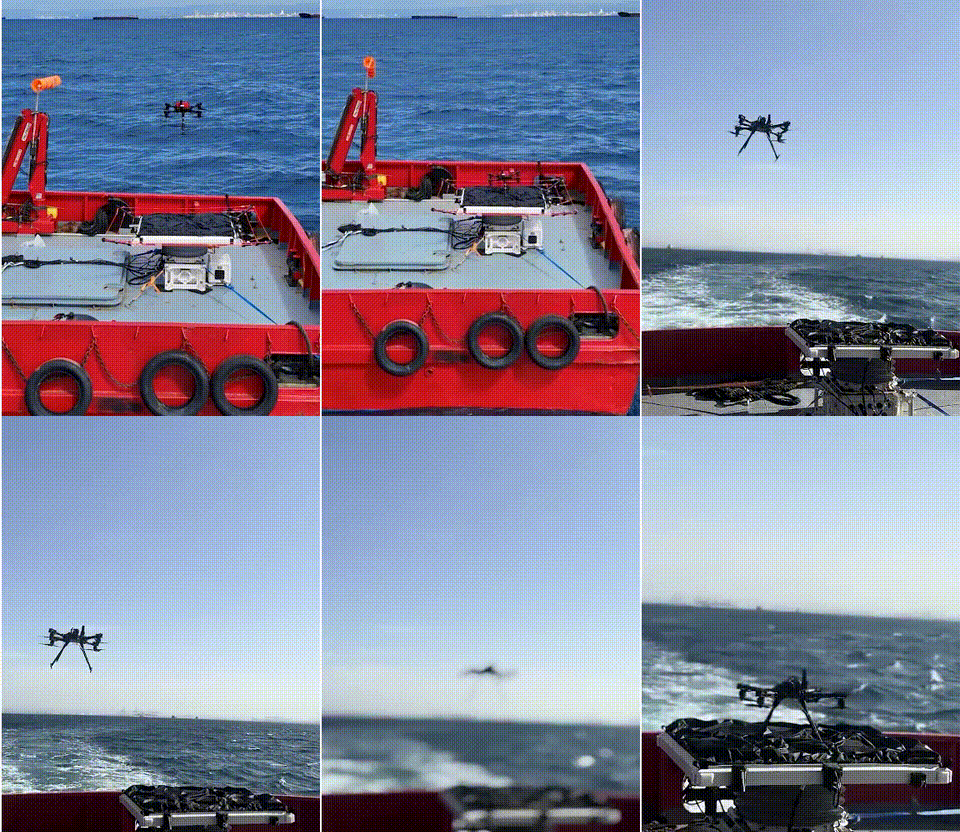
Drone flight has become incredibly advanced. Stabilization, autonomy, and navigation systems have reached a point where flying is no longer the biggest challenge.
But at sea, landing is still a gamble.
Unpredictable waves, constantly shifting decks, and slippery surfaces make even the most experienced pilots struggle. As a result, most offshore drone operations are still limited to calm weather windows—severely restricting their real-world value.
Now, a young ocean-tech company—WaiV Robotics—believes it has found a breakthrough.
🚢 The Core Problem: Why Landing at Sea Is So Difficult
On land, drone landing is relatively predictable.
Even with wind, the ground doesn’t move.
At sea, everything changes:
- Pitch (forward/back tilt)
- Roll (side-to-side motion)
- Heave (vertical movement)
And all of it happens simultaneously and unpredictably.
Add to that:
- Wet and slippery surfaces
- Limited deck space (especially on small vessels)
- Saltwater corrosion risks
📌 The result:
Reliable drone recovery becomes one of the biggest bottlenecks in offshore deployment.
⚙️ A Different Approach: Make the Platform Smarter, Not the Drone
Instead of redesigning drones, WaiV Robotics took a different path:
👉 Upgrade the landing infrastructure.
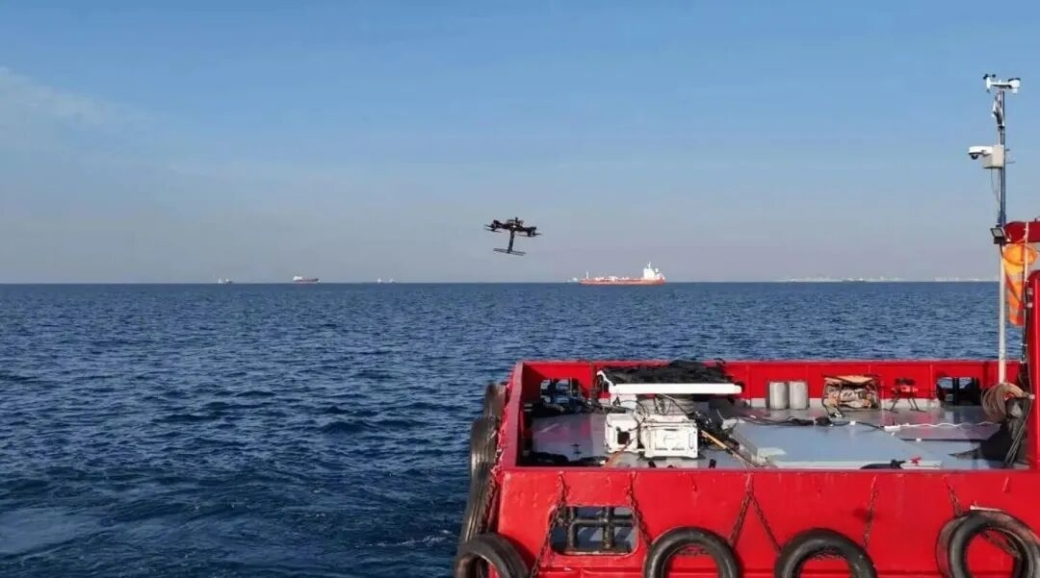
Their system introduces an AI-powered, gyroscopically stabilized landing platform that actively compensates for vessel motion and takes control of the landing process.
🔍 How It Works:
- Real-time motion prediction
The system continuously analyzes vessel movement patterns - Adaptive flight path correction
It dynamically adjusts the drone’s landing trajectory - Impact absorption
A specialized landing pad absorbs shock during touchdown - Instant capture & lock
A grab-lock-release mechanism secures the drone immediately upon contact
📌 In simple terms:
The system doesn’t wait for a perfect landing—it creates one.
🔄 Plug-and-Play Compatibility (No Drone Modification Required)
One of the most impressive aspects of this solution:
👉 No hardware or software modification is required on the drone side.
The platform supports:
- Multirotor drones
- Hybrid VTOL drones
- Helicopter-type UAVs
For operators with existing fleets, this is a major advantage:
- No redesign costs
- No certification delays
- Immediate deployment potential
⚖️ Performance Range & Scalability
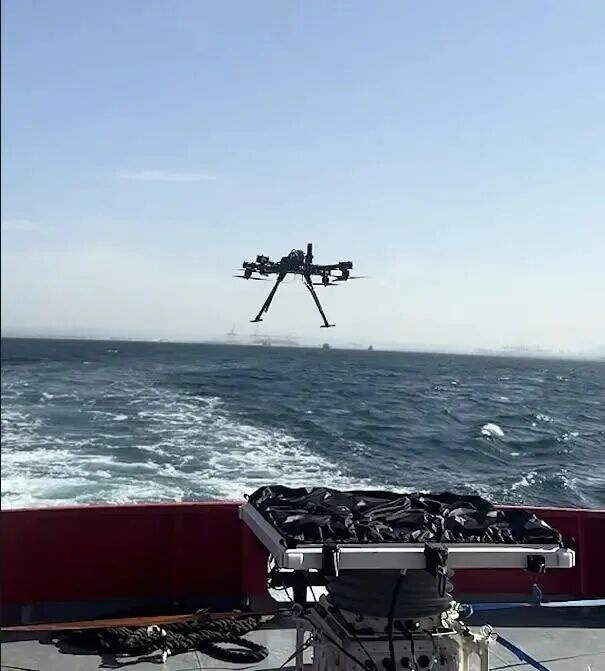
Currently, the system supports drones up to 15 kg, with a clear roadmap:
- Small UAVs (~3 kg)
- Heavy-duty platforms (100–300 kg class)
Even more interesting:
👉 It can operate on vessels as small as 10 meters in length.
This means:
- Small boats can become mobile drone hubs
- Offshore flexibility increases dramatically
🌍 Why This Matters: Unlocking the Offshore Drone Economy
Industries like:
- Offshore oil & gas
- Maritime security
- Coast guard operations
- Search & rescue
have long recognized the value of drones:
✔ Reduced operational cost
✔ Improved safety
✔ Real-time data access
But one issue held everything back:
👉 No reliable way to land at sea
WaiV Robotics is directly targeting this gap.
🚀 Potential Impact
By turning vessels into autonomous drone bases, this technology enables:
- Persistent offshore inspection missions
- Real-time surveillance and monitoring
- Faster inter-vessel logistics (tools, spare parts, medical supplies)
- Scalable search and rescue operations
And most importantly:
👉 All of this without replacing existing drone fleets
💰 Momentum Behind the Innovation
WaiV Robotics has already secured $7.5 million in seed funding, signaling strong confidence in the market need and technical feasibility.
🔑 Final Takeaway
For years, the drone industry has focused on making drones smarter.
But in offshore environments, the real breakthrough may come from something else:
👉 Smarter infrastructure.
Because sometimes, the problem isn’t how well a drone can fly—
it’s whether it has a safe place to land.
💬 Closing Thought
As offshore operations push further into automation, solutions like this could redefine how drones are deployed at sea.
The question is no longer:
“Can drones fly offshore?”
But rather:
👉 “Can they operate continuously, reliably, and at scale?”
With innovations like this, the answer is getting much closer to yes.