
For years, drone development has followed a familiar path: longer range, higher autonomy, faster data links, and stronger wireless communications.
But recent conflicts have revealed a different reality.
When the electromagnetic spectrum becomes contested, the most advanced wireless drone can suddenly become blind, deaf, or completely uncontrollable.
This challenge has driven the rapid emergence of a new category of UAVs:
Fiber-Optic Drones.
Also known as fiber-guided drones, these systems are redefining how operators think about drone communications, survivability, and electronic warfare resilience.
What Is a Fiber-Optic Drone?
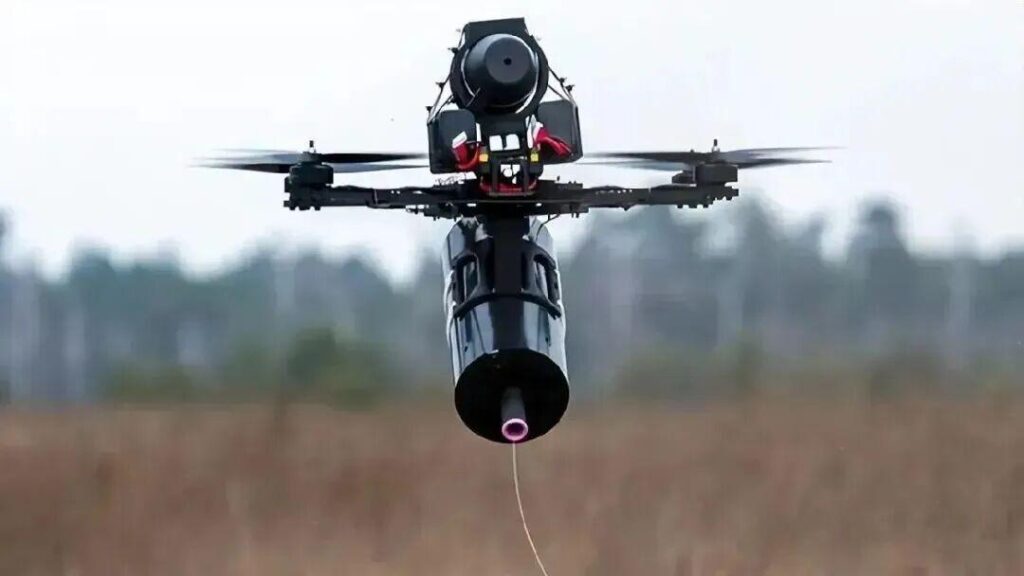
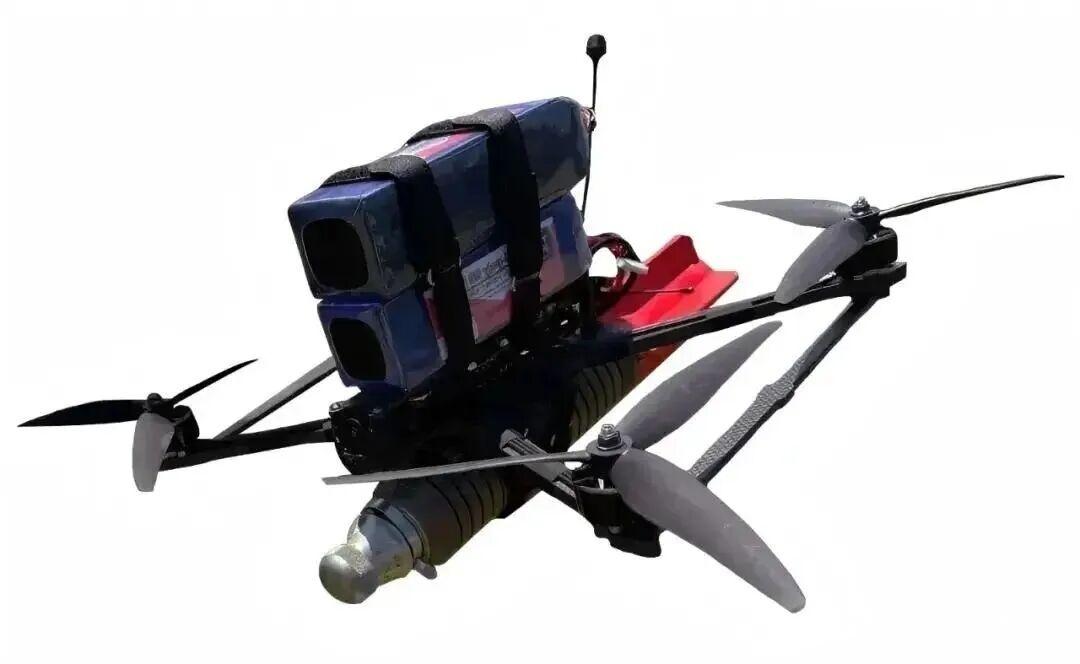
At first glance, a fiber-optic drone looks similar to a conventional FPV or tactical UAV.
The difference lies in how it communicates.
Instead of relying on radio frequency (RF) links, satellite navigation, or wireless video transmission, a fiber-optic drone remains physically connected to its ground control station through an ultra-thin optical fiber.
During flight, a specialized onboard spool continuously releases fiber cable while the drone moves toward its target.
The fiber carries:
- Flight control commands
- Telemetry data
- Real-time video streams
- Targeting information
between the drone and the operator.
In simple terms:
The drone never “broadcasts” its presence.
It communicates through light rather than radio waves.
Why Fiber Optics Matter
Modern electronic warfare systems are becoming increasingly effective.
Traditional UAVs depend on:
- RF control links
- GPS signals
- Wireless video transmission
All of these can be:
- Jammed
- Spoofed
- Intercepted
- Detected
Fiber-optic drones eliminate many of these vulnerabilities.
Key Advantages
1. Near-Complete Immunity to Electronic Jamming
Because communications travel through physical fiber rather than radio waves, conventional jamming systems have little effect.
Even in heavily contested electromagnetic environments, operators maintain control and video connectivity.
2. No RF Emissions
Fiber-optic drones emit virtually no radio signals.
This dramatically reduces their electronic signature and makes detection by RF surveillance systems significantly more difficult.
3. Ultra-Low Latency
Optical communication provides extremely fast signal transmission.
Operators receive near-real-time video feedback, enabling highly precise maneuvering and target engagement.
4. Stable High-Definition Video
Fiber links can support:
- HD video
- Full HD video
- 4K video transmission
without the degradation commonly experienced in wireless environments.
This makes them particularly useful for reconnaissance and precision targeting missions.
The Trade-Offs: Nothing Comes for Free
Like every engineering solution, fiber-optic drones involve compromises.
Limited Operational Range
Flight distance is directly tied to the length of fiber carried onboard.
Most current systems operate within:
- Several kilometers
- Tens of kilometers
rather than the hundreds of kilometers achievable with satellite-enabled UAVs.
Reduced Maneuverability
The fiber creates physical constraints.
Aggressive maneuvers such as:
- Sharp turns
- High-speed spirals
- Complex obstacle navigation
can increase the risk of cable breakage.
Terrain Challenges
Dense environments present significant risks.
Fiber can become:
- Entangled in trees
- Caught on buildings
- Snagged on power lines
- Obstructed by terrain
As a result, fiber-optic drones perform best in relatively open operating areas.
Single-Use Fiber
The deployed fiber is generally not recoverable.
Once released, it becomes a consumable component of the mission.
Fiber-Optic Drones vs Traditional UAVs
CapabilityTraditional Wireless UAVFiber-Optic UAVElectronic Warfare ResistanceMediumExtremely HighGPS DependencyOften RequiredMinimalRF Detection RiskHighVery LowLong-Range CapabilityExcellentLimitedManeuverabilityExcellentModerateOperational CostModerateModerateCommunication StabilityVariableExtremely Stable
Rather than replacing conventional UAVs, fiber-optic systems are creating a new mission category.
Ideal Applications
Fiber-optic drones are particularly effective for:
Tactical Reconnaissance
Operators can gather intelligence in heavily jammed environments while maintaining uninterrupted video feeds.
Precision Strike Missions
The stable communication link allows accurate engagement of:
- Armored vehicles
- Defensive positions
- Fixed infrastructure
- Moving tactical targets
Electronic Warfare Environments
When RF denial systems make traditional drones ineffective, fiber-optic UAVs remain operational.
Covert Observation
The absence of RF emissions significantly enhances stealth characteristics.
What Does This Mean for the UAV Industry?
The rise of fiber-optic drones highlights a broader trend:
Future UAV competition may no longer be about range alone—it may be about survivability in contested environments.
For years, the industry prioritized:
- Longer flight times
- Greater autonomy
- Higher payload capacity
Today, electronic resilience is becoming equally important.
The question is shifting from:
“How far can a drone fly?”
to
“Can it still complete its mission when GPS is denied and communications are under attack?”
Implications for Drone Battery Systems
As a drone battery professional, I find the energy implications particularly interesting.
While fiber-optic communication eliminates many RF-related vulnerabilities, it also introduces new design considerations.
Power System Requirements
Fiber-optic drones require:
- High reliability power delivery
- Stable voltage platforms
- Efficient onboard electronics
- Lightweight system integration
Since mission success often depends on precision control in high-threat environments, battery performance becomes critical.
Weight Optimization Matters More
Every gram counts.
The aircraft must carry:
- Payload
- Airframe
- Fiber spool
- Power system
without compromising endurance.
This creates strong demand for:
- High-energy-density lithium batteries
- Lightweight pouch-cell architectures
- Advanced BMS technologies
- High-discharge-rate battery designs
Future Opportunities
As fiber-guided UAVs evolve, battery manufacturers may need to develop specialized power solutions optimized for:
- Tactical reconnaissance drones
- Precision strike platforms
- Electronic warfare-resistant UAV systems
The combination of anti-jamming communications and high-performance battery technology could become a key differentiator for next-generation tactical drones.
Final Thoughts
Fiber-optic drones represent an important reminder that innovation does not always mean adding more wireless capability.
Sometimes the most effective solution is removing wireless communications altogether.
By sacrificing some range and maneuverability, fiber-guided UAVs gain something increasingly valuable:
Reliable operation in environments where traditional drones struggle to survive.
As electronic warfare capabilities continue to evolve worldwide, fiber-optic drones are likely to become an increasingly important component of the UAV ecosystem—not as a replacement for conventional drones, but as a specialized tool designed for missions where communication reliability matters more than anything else.